
The Gers: Why Southwest France's Food Culture Is Different From the Rest
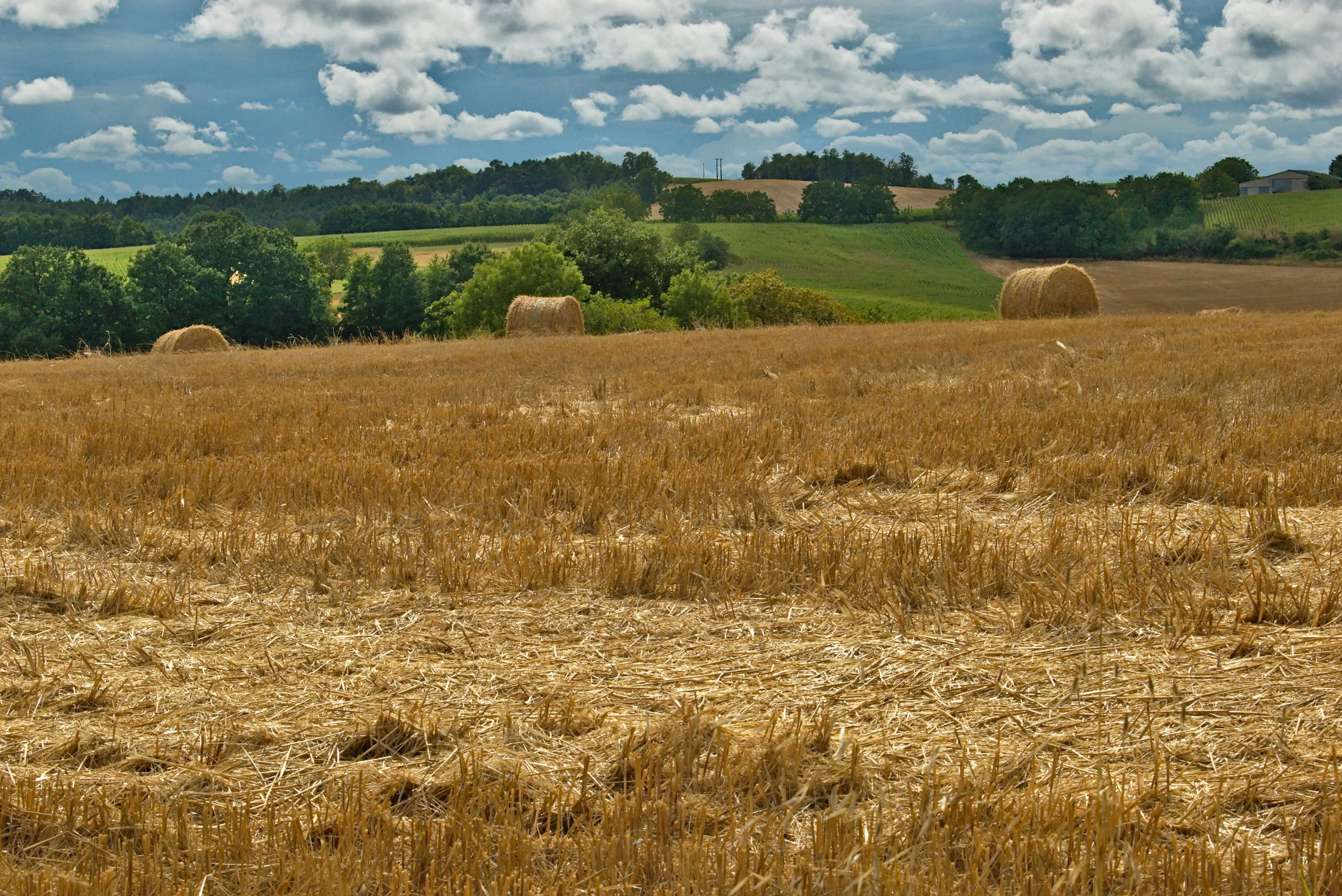
Before Rêverie existed — before Château de Labusquière, before Chef Paul, before any of us had thought to teach a guest how to break down a duck — there was the Gers.
It's the region most of our retreats are built around, and if you've spent a week with us, you already know pieces of it: the market at Samatan, the confit, the Armagnac poured a little too generously after dinner, sunflower fields going gold on the drive back to the château. What you might not know is why it tastes the way it does, or why a chicken here can taste like something a chicken in a supermarket back home usually doesn't.
Our guest writer, Mélodie, grew up in Toulouse and spent her school years just down the road from us, in Marciac, right in the middle of Gers country — at an age when none of this felt special yet. It just felt like lunch. It wasn't until she left, lived somewhere else entirely, and came back that she understood what she'd actually grown up inside of.
We asked her to write it down. Consider it a primer on the region — and a small preview of where we're taking things next. (More on that soon.)
Here's Mélodie, in her own words.
I didn't realize what food meant to me until I left home and had to feed myself for the first time (and I discovered, pretty quickly, that I'm not much of a cook…).
My partner, on the other hand, is the kind of cook who could have gone professional if he'd chosen that path, and I'm endlessly grateful he feeds our family every single day, as if we were clients of his own restaurant.
I do bring something to the table (literally) though: a deep appreciation that was instilled in me from a very young age, as I spent most of my adolescence in the very region where Rêverie hosts most of its retreats: the Gers.
At the ripe age of 11, I enrolled in a boarding school in Marciac to study jazz music.
For close to three weeks every summer, this small village Gersois is entirely taken over by Jazz in Marciac, an international festival whose stage has hosted Nina Simone, Ray Charles, Ibrahim Ferrer and Norah Jones, amongst many others.
A lot of people travel there from all over France and the world for the music, of course, but they also generally come back again and again for the farm-to-table food culture that defines the region:
Foie gras in all its glory: on bread with flaky sea salt, or with grapes, or in rich sauces, or pan-fried and served with gésiers in a salad
Delectable duck confit (the Gers is the duck region of France)
Armagnac, a strong brandy distilled from wine in the neighboring Armagnac region of Gascony
Juicy melons served with floc de gascogne, an aperitif made from Armagnac and fresh grape juice
An abundance of other grass-fed poultry, another local specialty
During the school year, our cantine (cafeteria) served us all the traditional French dishes: hachis parmentier, cordons bleus, boiled eggs with mayonnaise, veal blanquette...
And for dessert: île flottante, crème vanille, riz au lait,...
We were even served foie gras before Christmas break!
A few of the kids loved to act unimpressed, I think it’s because it made them feel cool… but nearly every plate came back empty, and most of us asked for seconds, because it really was that good (and I was a picky eater)!
What I knew then was simply that the food at school was good, but it kind of felt normal.
What I understand now is that the Gers is one of the most agriculturally protected regions in France, and that’s why it was so good!
The duck, the Armagnac, the melons, the poultry: many carry an AOC (Appellation d'Origine Contrôlée, or Protected Designation of Origin) or a Label Rouge certification.
These aren't just stamps of approval, they're France's way of saying a product belongs to its land, and the land is what makes it what it is.
For example: Roquefort cheese can only come from one cave system in the south of France, Champagne can only come from Champagne, and Armagnac can only come from Gascony, distilled the way it has been for centuries.
Label Rouge goes a step further, guaranteeing superior taste and production standards: the famous poulet jaune (the yellow-fleshed Gers chicken), raised slowly on open pasture, is one of its most iconic products.
If you've ever wondered why chicken tastes different in France, this is a big part of the answer.
The Gers itself is one of the least densely populated departments in France, and one of the most agricultural.
The landscape there is mostly made of rolling hills, small family farms, quaint little towns and villages, and fields of sunflowers and corn stretching to the horizon, which is why people sometimes call it the French Tuscany.
Its economy still runs on small-scale duck and goose farming, Armagnac production, and those extraordinary melons, rather than the industrial agriculture that dominates a lot of the regions elsewhere in the country.
The land is taken seriously, and the food that comes from it even more so.
When I was 19, I moved to Boston, and I had my first real encounter with the American way of eating, in all its glorious chaos.
A disclaimer here: I love the US deeply, as my dad was from Kentucky, a lot of my family is still there, and American food culture has a richness I genuinely love, too.
But the whiplash was real.
In Boston, and even more so in New York, I was struck by the sheer volume of options available at any hour of the day or night, all within a few blocks of each other, a lot of it delicious, but also completely disconnected from a particular place or season.
It was overwhelming in the best way though, and I did fall in love with how different food can taste in Los Angeles, or New Orleans, or Albuquerque, all within one single country, compared to the one I grew up in, which is smaller than a single US state.
I also worked in a French restaurant in Boston during that time, and that was its own education.
The food was technically French, but it existed in a different context entirely: a performance of Frenchness for an audience, rather than just... Tuesday lunch.
That was the first time I understood that the way I'd been raised to think about food wasn't really just about food.
It was a framework for how to live, day to day, season to season.
Coming home to France, I started noticing things I'd never registered before.
The way most French people buy their produce and meat from their local market, no matter their income.
Or the way my one of my coworkers would pause mid-sentence at noon, every day, to ask, very seriously: "what are we having for lunch?".
Or the way a one-hour lunch break is treated as the bare minimum, not a luxury, and eating it at your desk is met with… genuine concern.
And how it's completely normal to sit alone at a restaurant with a book and a glass of wine, taking your sweet time, and no one looks at you twice for it.
Food in France isn't a fuel stop, it’s a daily ritual of presence, a built-in reason to slow down, connect, and actually taste what's in front of you, every single day.
It asks you to pay attention, and then it’s up to you to do it or not (if you’re able and willing).
Most days, most of us aren't able or willing, unfortunately, because .. well, modern life.
But every once in a while, you visit a place that makes it easy to remember how, not because the food is fancier, but because everything around it slows down enough to let you.
Maybe that's the real gift the Gers region gave me, long before I knew to call it that.
—-
That last line is the one we keep coming back to: every once in a while, you visit a place that makes it easy to remember how.
That's more or less the whole job description around here. It's why we go to the market on every single retreat. It's why Chef Paul sources the way he does. And it's a big part of why, in 2027, we're building something new around exactly this — hands in the dirt, duck on the board, cooking the way the Gers actually cooks it, not the polished version. We'll have more to share soon. For now, come see the region for yourself.
—-
Mélodie is a curious épicurienne, copywriter and social media marketer.
She was born in Paris to a French mother and an American father, and grew up in Toulouse, (not arguably) the coolest city in France.
She helps conscious brands tell stories as rich as the ones she grew up around, and writes, whenever she can, about the things worth slowing down for.
You can subscribe to her weekly newsletter or check out her substack.
Links:
newsletter: https://ellathestudio.myflodesk.com/for-the-record
substack: https://melodiesrecords.substack.com/