
Breaking bread together: Meet Paul Albert, the Spirit Behind Reveroo

Chef Paul Albert
Everyone says Paul Albert is the nicest chef they've ever met.
Which is funny, because most of us don't know many nice chefs. The kitchen has a reputation — ego, heat, hierarchy. Someone yelling about a sauce. Someone guarding a recipe like it's a state secret.
Paul doesn't do any of that.
He'll teach you how to stretch mozzarella while explaining why nobody owns cheese. He'll hand you warm bread straight from the oven and tell you it took him 2,000 tries to get it this good — and he's still learning. He'll give you the recipe for his braised lamb, then shrug and say it'll taste different when you make it anyway, because your carrots are sweeter, or you used white wine instead of broth, or it's Tuesday and the weather changed.
Paul is a baker, a chef, a cheesemaker, a teacher. But more than anything, he's someone who believes food should be fun — and that cooking is about connection, not control.
Which is exactly why he's the heart of Reveroo, our new week-long retreat launching this June.
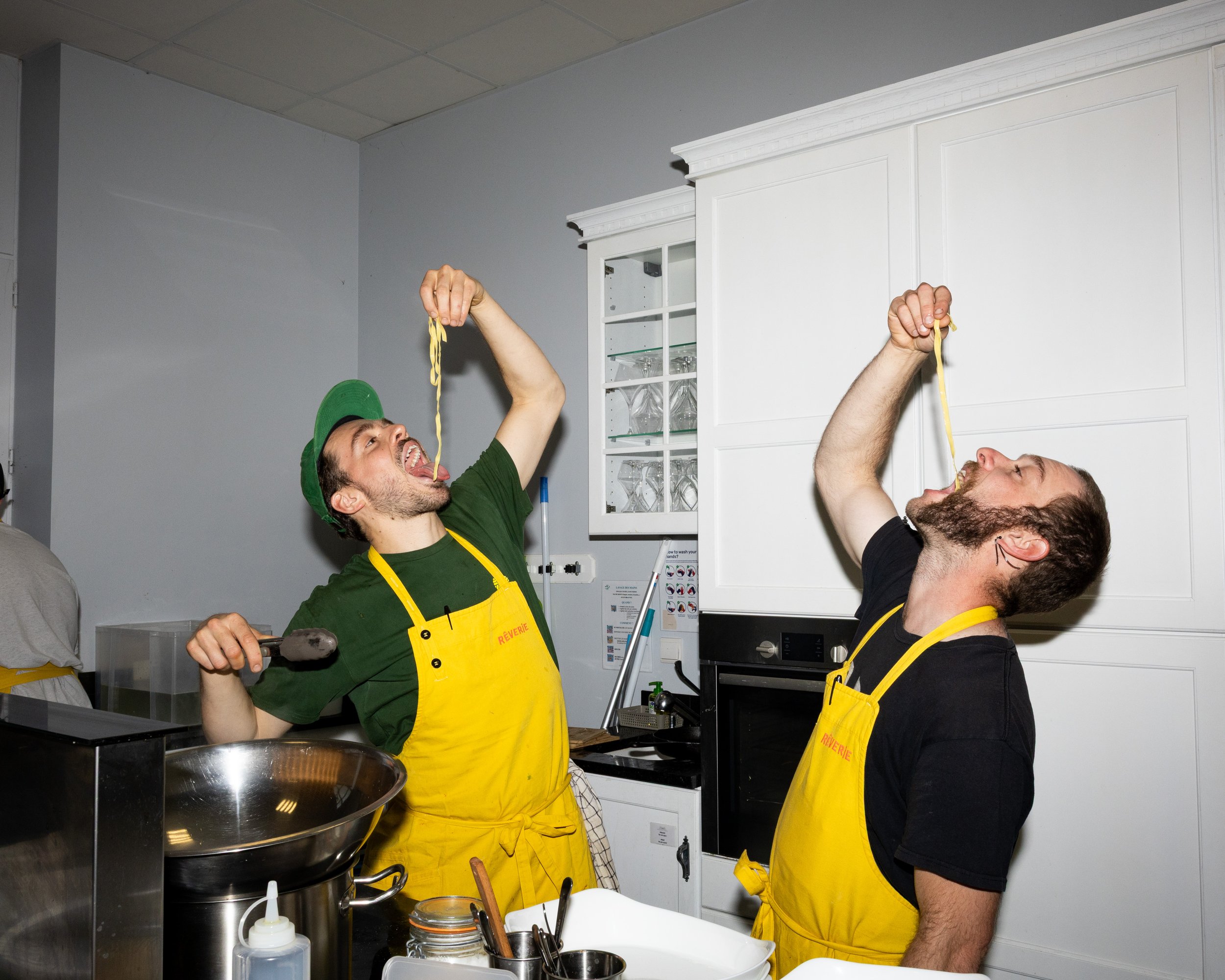
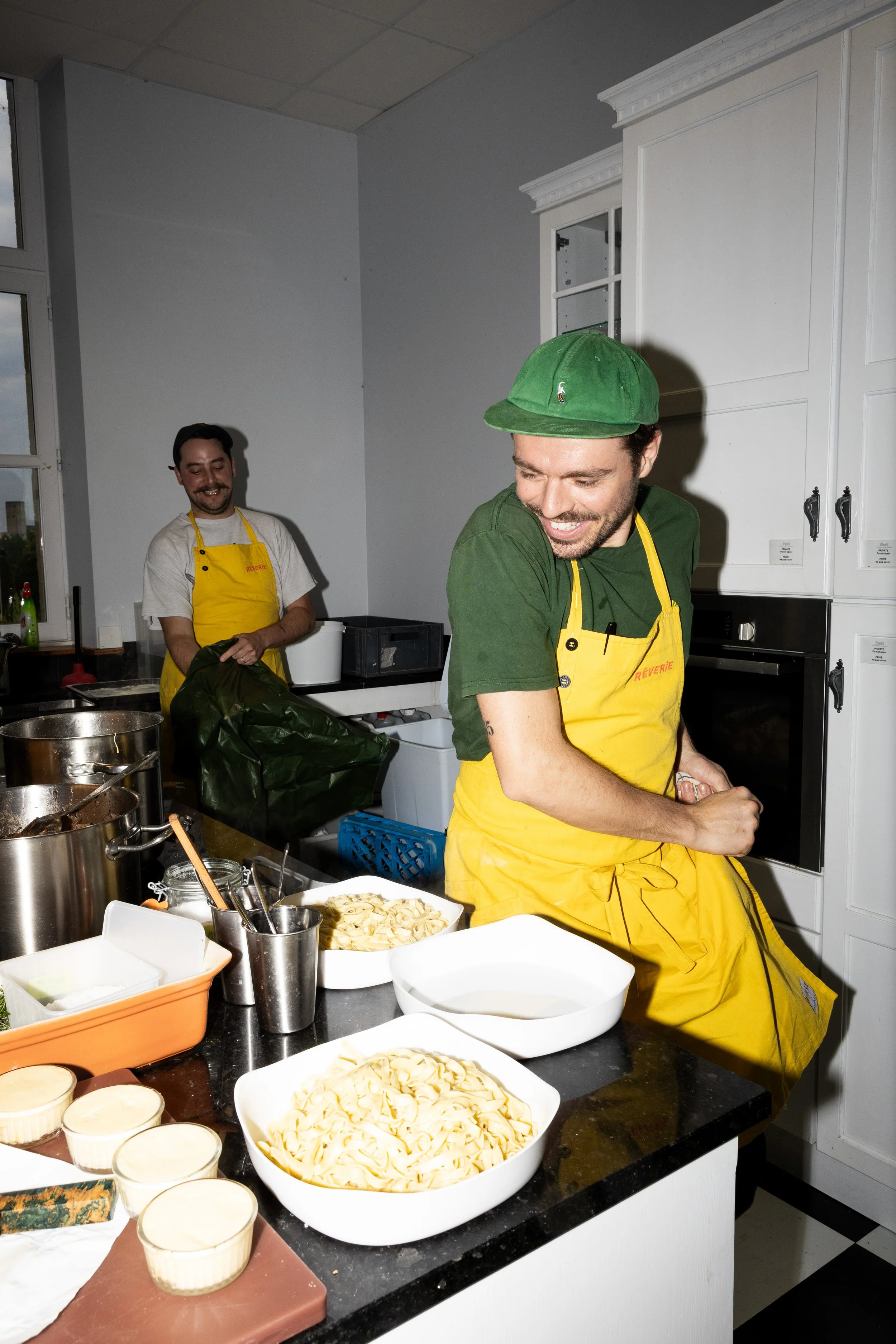
The Kind of Chef Who Loses His Voice Teaching
Paul didn't start out planning to teach. He trained in Michelin kitchens across France, Brazil, Singapore. He learned precision, technique, the high-wire act of fine dining. But somewhere along the way, he realized something: he was cooking for 0.0000001% of the world.
"What the fuck?" he thought. "I'm like cooking for nobody."
Then he discovered bread. And fermentation. And the whole crazy science behind transforming flour and milk into something everyone understands. It was technical, rigorous, as complicated as any Michelin kitchen — but the final product? Bread and cheese. The most democratic, deeply human foods in the world.
So when COVID hit and his bakery in Singapore started offering sourdough workshops, Paul said yes. He taught four people at a time how to make their own bread. Simple recipes. No pretension. Just knowledge shared freely, the way it should be.
He loved it so much he lost his voice. Literally. He kept shouting (not out of anger — just energy, too much energy) and kept teaching anyway, building a whole academy around natural fermentation, pulling bakers into WhatsApp groups to exchange ideas, learning as much from them as they learned from him.
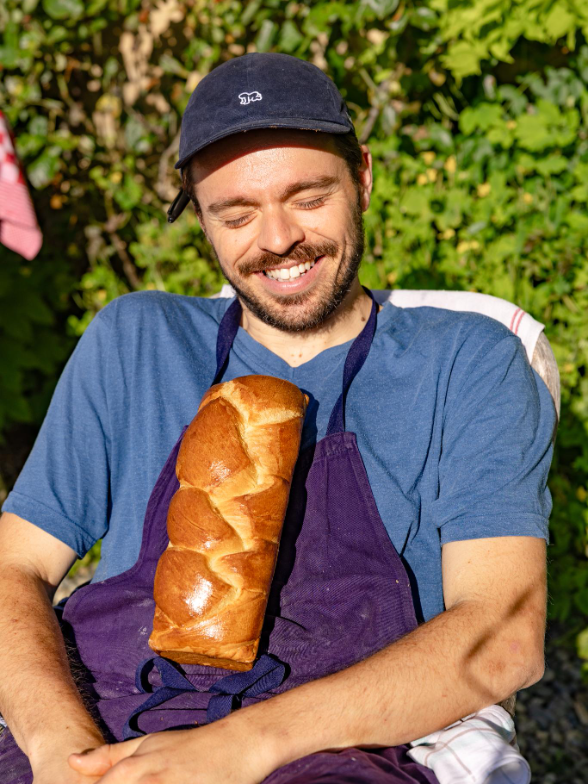
"I realized I had this capacity to make things simple to understand," he says. "When you cook fine dining food in a restaurant, you give someone a memory, a taste. But when you teach someone something and they try it — that's different. They remember the moment they made their first loaf. That's theirs forever."
Fermentation as Philosophy
Paul talks about knowledge the way he talks about sourdough starter — something alive, something you feed, something you pass along.
"You get fed by someone's inspiration," he says. "Then you cultivate it. And then you pass it to someone else."
Nobody owns bread. People have been fermenting grains for 15,000 years. Nobody owns cheese — it's been around for 8,000. Korean culture owns the tradition of kimchi, sure, but nobody owns the recipe, because there are as many kimchi recipes as there are Koreans. As many French tomme cheese recipes as there are French cheesemakers.
Paul believes this deeply: recipes don't belong to anyone. You can't copyright a lamb braise. You can share the steps, the ratios, the approach — but the dish will always be different depending on where you are, who you are, what you have in front of you.
"The lamb I cook at Rêverie will be different than the one you make at home," he says. "Different carrots. Different onions. Different sugar levels. Maybe I use broth. Maybe you use white wine. Maybe I add lemon this time because I'm pairing it with brown butter potatoes and I need the acid."
Food is always about perspective and circumstances.
Which is why Paul doesn't hoard. He shares everything — techniques, metaphors, the vocabulary that makes fermentation feel less intimidating and more like something you can actually do in your own kitchen.
He's not interested in secrets. He's interested in people reappropriating what we've lost — the knowledge of how to make our own food, the confidence to trust ourselves in the kitchen, the permission to experiment and fuck it up and try again.
Teaching Without Ego
Paul has taught all kinds of people. Professionals. Home bakers. People who showed up to a workshop because their friend dragged them. Instagram foodies who spent the first twenty minutes taking photos.
The challenge, he says, is finding the right vocabulary.
"You have to understand who's in the room. Some people already know what you're talking about — they're bakers, they get it. But then you have someone who came along with their mom, and they're not really interested. So you give them bread to try. You give them cheese. You say, 'These two things taste acidic because they have the same bacteria.' And suddenly they're listening."
Or the foodie taking pictures? You hand them the dough. You say, "Mix it like this." You use metaphors, images, something that talks to them in their language.
"At the end of the class, even if people came with different expectations, they're exchanging contacts. They're taking photos together. They want to send each other pictures of their bread. And I'm like — okay, I think I did it right."
Because the goal isn't just teaching someone how to make bread. The goal is the human experience. The connection. The comfort that comes from working with your hands, sharing a table, realizing you're not alone.
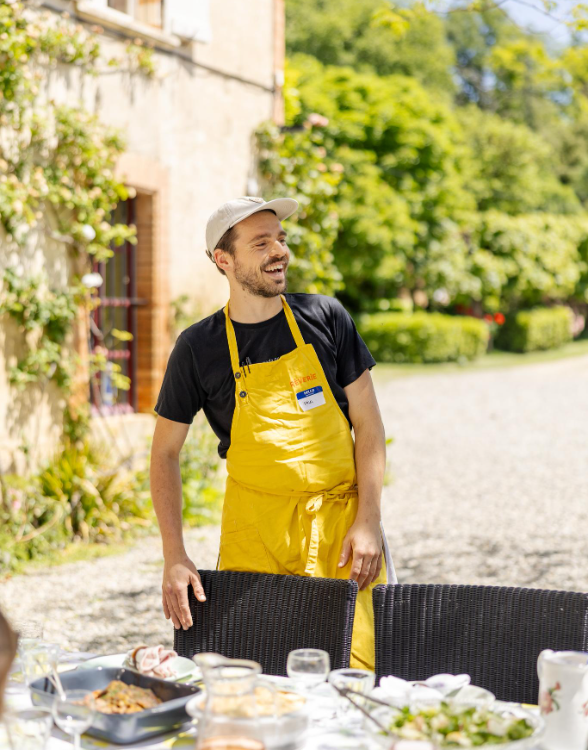
"That's what people are chasing," Paul says. "Human connection. That's why they come to Rêverie. That's why they dare to travel by themselves from the U.S. and meet strangers and speak a different language. It's food and people. That's the link."
What Reveroo Actually Feels Like
Reveroo isn't a cooking class. It's not a standard retreat where someone cooks for you and you watch.
It's slower. More participatory. More human.
Paul describes it as a week where you stop time. You don't think about anything outside of where you are. You focus on the food in front of you — the carrots you just bought at the market, the lamb you're braising together, the bread rising on the counter.
"We're going to have deep connection with the raw materials we work with," he says. "Not recipes. An approach. A perception. And everyone shares their own, because we're cooking together."
Paul isn't leading. He's guiding.
You'll learn about natural fermentation — cheese, bread, maybe some lacto-fermented vegetables like kimchi or sauerkraut. You'll visit local producers, pick up meat or vegetables straight from the farm, and cook them that same day. You'll talk about the history of the food you're making, the soil it came from, the people who grew it.
And yes, you'll wash dishes. You'll prep carrots. You'll be in the kitchen, hands in dough, part of the process.
Because that's where the magic happens. Not in watching someone perform. In doing it together.
"Food is fun," Paul says. "We have to make it fun. We're not saving lives. We're not sending rockets to the moon. We're just cooking food."
He pauses.
"But if we go back to basics — back to the soil, back to the connection between us and what we're eating — that's when it becomes something more."
The Luxury of Slowing Down
Paul was nervous when Julie asked him to host Reveroo.
"Are you sure?" he asked. "People don't know me."
But that's the point. Reveroo isn't about celebrity chefs or name recognition. It's about trust that gets built in real time — over a shared meal, a late-night conversation, the quiet focus of kneading dough together.
It's about the luxury of time. Time to stop. Time to pay attention. Time to get your hands dirty and learn something new and laugh when it doesn't go quite right.
"We have this luxury of stopping time and just focusing on what we're going to eat," Paul says. "And we're going to have fun. Because food — that's a luxury."
At Reveroo, you won't just eat well (though you absolutely will). You'll understand where the food came from. You'll know how to fillet a fish properly, how to season thoughtfully, how to respect the ingredients in front of you.
You'll leave with Paul's approach in your bones — not a collection of recipes, but a way of seeing food. A way of being with it.
And maybe, just maybe, you'll go home and sign up for that sourdough workshop you've been thinking about. Or make fresh cheese for the first time. Or call your grandmother and ask her how she used to braise lamb.
Because that's what Paul does. He plants seeds. He passes along the starter culture. He trusts that you'll take it somewhere beautiful.
Reveroo happens June 2026 in Toulouse, France. One week. Paul Albert. A small group of people ready to slow down, get their hands dirty, and remember what it feels like to make something from scratch.
No ego. No performance. Just good food, good people, and the kind of week you'll still be talking about years from now.
Sound like your people? Learn more about Reveroo here.
