
How We Plan Our France Culinary Retreats: The R and D Behind Every Rêverie Week
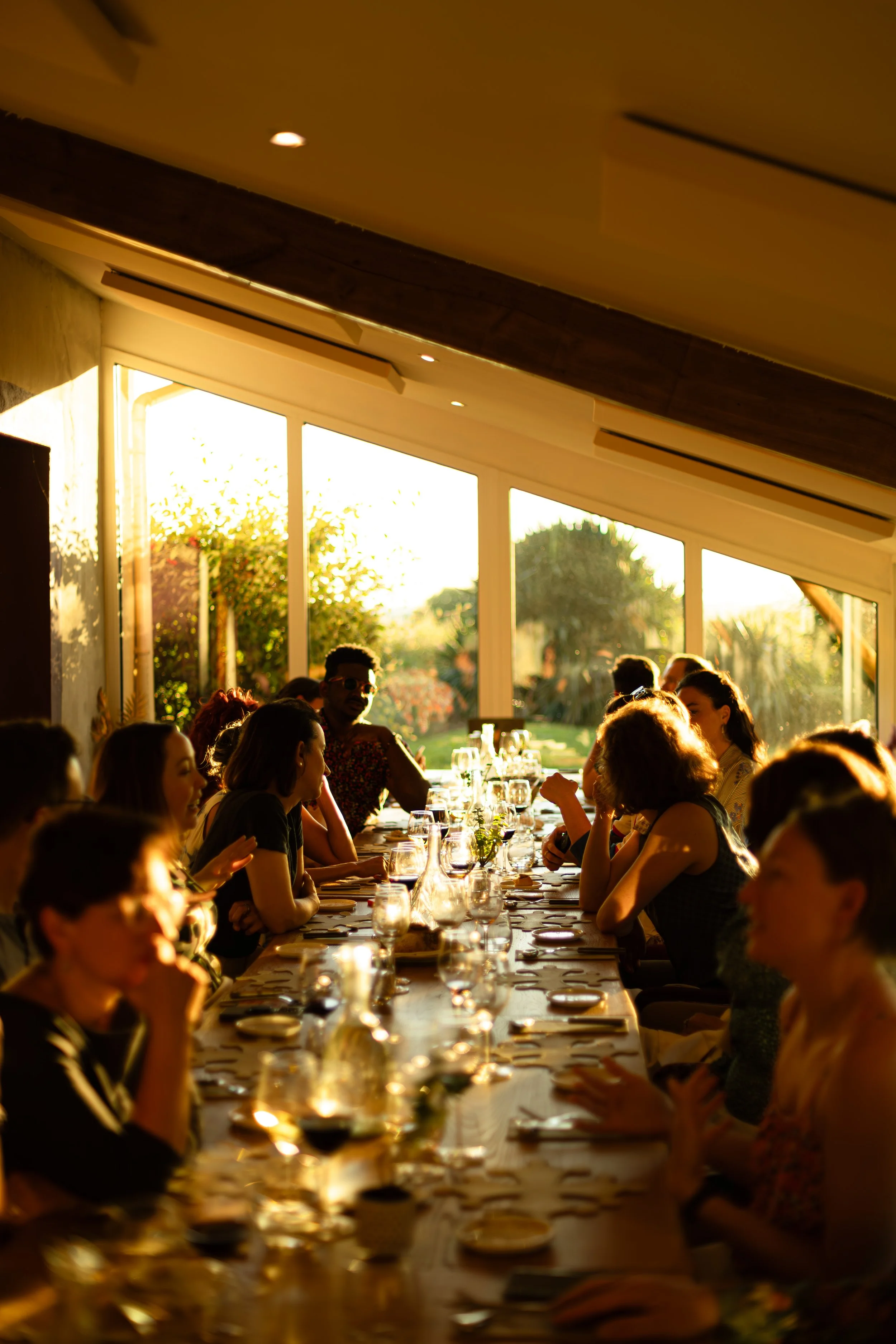
How we build our experiences at Rêverie? In other words: R&D at a retreat company.
An unbelievable amount of work goes into planning a Rêverie retreat. Despite only having retreats happen 12-14 weeks a year, Rêverie is a year round operation! And for good reason. Researching, planning, testing, tweaking, experiencing every aspect of what goes into your retreat before it happens is a massive part of the gig (yes, we have to drive around France testing restaurants and châteaux for the night, tough life!). So we're pulling back the curtain to share exactly how we test out the goods before we go on retreat.
It starts with where you sleep.
Every Rêverie week is built outward from the accommodation. We have to find the right place, in the right location, that can accommodate the right amount of people (not too few, not too many) at the right price AND it needs to feel unmistakably Rêverie. We have a very specific checklist for what makes the cut! The kitchen needs to pull double duty — producing three real meals a day for a group run by professional chefs (including Chef Paul, rising with the sun and making cheese from scratch) while still functioning efficiently through cooking workshops in between. The space needs room for everyone to gather at a long table, a spot for karaoke night, and cozy corners where someone can slip away for a few quiet moments. It's gotta be picturesque but not too precious. Beautiful enough to catch your breath, but not so over the top that you can't relax. The rooms need to be beautiful, functional, and comfortable while still retaining their French charm. We've been to places where owners have sanded out every bit of history and we've had to respectfully decline. The accommodations we choose are co-hosts for the week, and we don't take that lightly. These places need to have a bit of magic — something that makes you feel something the moment you walk in.
Then we look outward.
Once a property passes that first filter, the real research starts. Is there a market worth going to? Not just one that exists on a map, but one with enough stands, enough life, enough vegetables and flowers and cheeses and artisan-made pottery that it actually feels like a French market and not a parking lot with three tables? Is there a vineyard nearby? A farm? Here's the thing about France — Google lies. You won't find every village market or darling cheese farm or passionate winemaker through Google reviews and a functioning website. And even if these makers and producers do have a website, it's usually pretty rough, which means we have to visit and chat with every single person we plan to take you to. We need to identify a handful of superb experiences within an hour's drive. Otherwise, honestly, it's just not worth doing.
And then, once we've found those things on paper: we go.
We stay at the hotels. We eat at the restaurants. We walk out the front door.
Before we take you anywhere, we've been there ourselves. Multiple walk-throughs at each château, imagining every part of your itinerary. Staying at the hotel you'll sleep in on the first night (and eating the breakfast, obviously). Eating at every restaurant we're considering. Visiting the wineries and markets you'll visit. And the whole hospitality team comes along — Esmé with her impeccable taste and eye for detail, Kathleen with her logistical mastery and travel knowledge, and me, with years of experience traveling around France and knowing a good one when I see one.
Not everything makes the cut. Sometimes the food is incredible but the room is too stiff, and that doesn't pass in Rêverie's world. The test is always: could a table of new friends settle in here and stay way too long? If yes, we're in.
Same logic applies to markets, and then there are the vineyards. We have driven out to meet winemakers whose bottles I've been drinking for years — wines I genuinely love — and walked away knowing we couldn't take a group there. Not because the wine wasn't exceptional. Because the winemaker couldn't talk about it. A little closed off, not quite lighting up when they describe what they do. And even when I can translate perfectly, translation creates distance. You never fully connect with the person who made what's in your glass. The winemakers we bring you to are people who want you there, who get genuinely excited to share their work, and who speak enough English that the conversation just flows. The other producers? We'll still put their wines on your table during the week — you'll taste them, you'll love them — we just won't be driving you out to meet them.
The part that's changed.
When Rêverie was younger, I was still living in the States with a team of two, and we were not exactly in a position to do this kind of research properly. We did our best from far away. Sometimes it worked! There was a goat farm near our Toulouse château — adorable place, the most French farmers you can picture, thick southern accents, modest but genuinely delicious cheeses — that I wanted so badly to work. We tried it with a few groups. And while plenty of guests loved it, it required full hazmat gear (hair nets, the whole thing), zero shared language, and a patience level that not everyone has after a week of eating and drinking extremely well. We learned.
We also learned about driving the hard way. We used to put things on the itinerary two, even two and a half hours away, figuring Americans love a road trip, right? Turns out nobody on vacation wants to spend that much time in a car. We stay within an hour now, which requires a lot more digging, because so much of what's actually worth seeing in the French countryside simply isn't on the internet. You have to talk to people. Ask what's around here. Who's doing something cool. Who would a group of curious, food-loving visitors actually want to spend an afternoon with.
Why we keep coming back to the same places.
People sometimes ask why we return to Toulouse or Provence year after year before branching out somewhere new. It's not that we've run out of curiosity — it's that we'd rather go back and make something better than rush somewhere new before we're ready. Once a region is really right, we can focus our energy on refining rather than starting from scratch. And eventually, we get to move somewhere new and give it the same obsessive attention.
When you join us, we're showing you our favorite parts of the region. Not something picked off a list. We've been there. We've tasted. We've felt. And sometimes, we've danced.
This is, genuinely, my favorite part of the job. The drives, the wrong turns, the moment you walk into a place and just know. It's a lot of work. It's also a lot of fun — especially now that Esme and Kathleen come along for the ride.
Curious about where we're heading this season? Browse current availability at reverieforever.com.
