
Where Does Your Money Actually Go?
A completely unsexy, totally honest breakdown of what it costs to run a Rêverie retreat.
I've been thinking about transparency a lot lately.
Not the performative kind, but the real kind. The kind where you actually show someone what's going on behind the curtain, even when it feels a little vulnerable and perhaps a bit awkward.
You're trusting us at Reverie with something real. Your money, yes. But also your time, your willingness to show up in a foreign country and be open with a group of strangers over a lot of very good wine and very good food for an entire week. That's not a small thing. And I want you to know exactly what we do with it.
So here it is, every dollar accounted for.
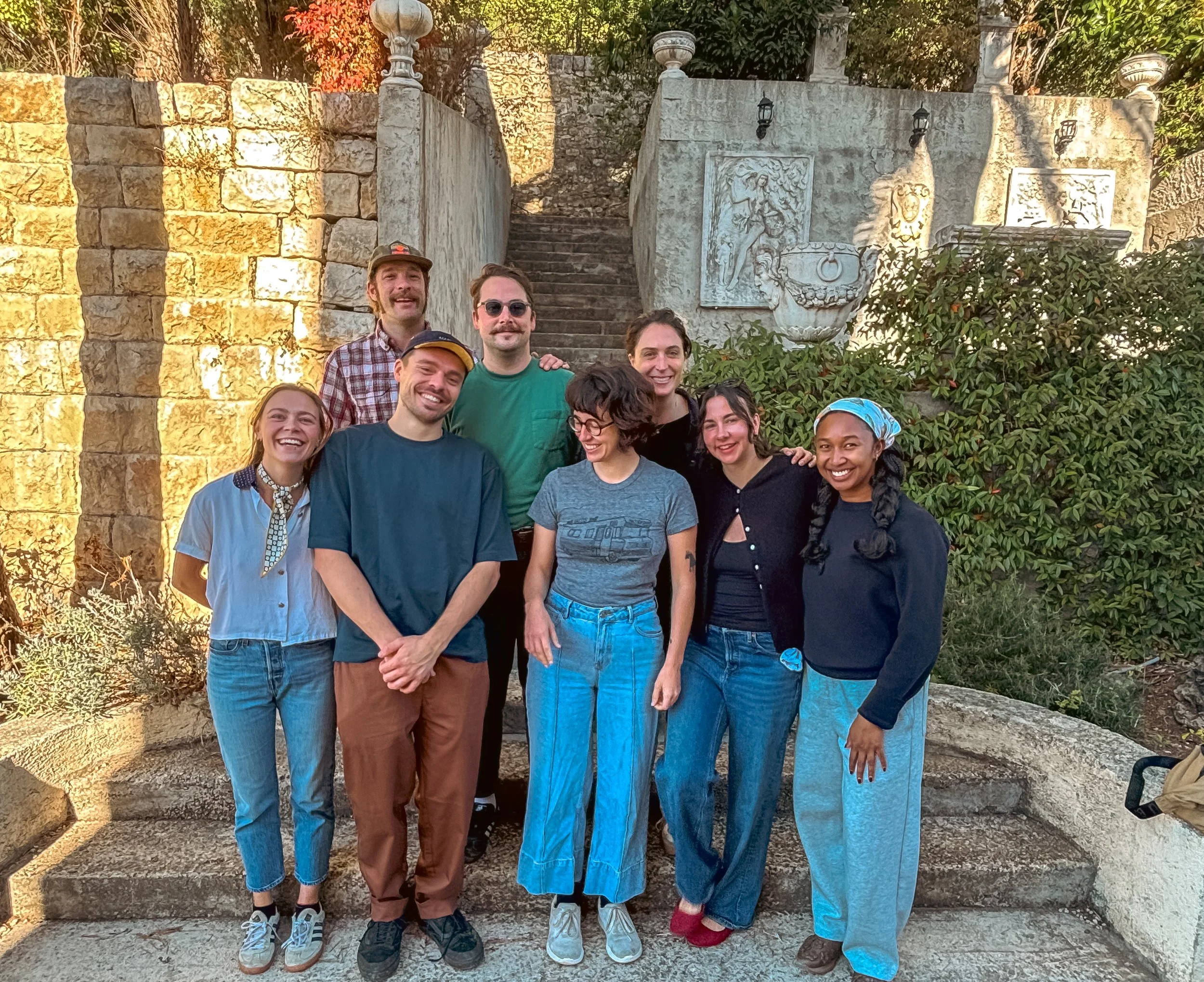
The team!
First, a word on why we cost what we cost.
You can absolutely find a cheaper culinary trip to France. Costco packages exist. Big tour operators exist. And if price is the primary variable, those options are fantastic.
But here's the thing about scale. When a company runs thousands of trips a year, the cost of keeping the lights on, the team, the systems, the infrastructure, gets spread across thousands of revenue-generating events. Here at Rêverie, we run 12 to 14 retreats over just a few months of the year, but our team works year-round. That means we have a much smaller number of trips across which we spread our operating costs, and that reality is reflected in our pricing.
There are also sleeker, newer travel companies out there offering seemingly comparable experiences at lower prices. Some of them are lovely! Some of them are also burning through venture capital funding and running at a loss, a math problem that eventually catches up with everyone. I'll leave you to draw your own conclusions there.
What I want to be explicitly clear about: Rêverie is a fully independent, self-funded small business. There is no silent investor bankrolling our operation. No venture fund absorbing our losses. Every dollar we spend is a dollar we earned, and that is something I am fiercely proud of.
Our team is lean by design. As the owner, I am also, depending on the day, the graphic designer, the marketing strategist, the social media manager, the accountant, and the person who just spent three hours on a train to go sleep in a château before you do. No algorithm can tell you how the food tastes. No AI model can feel the thread count of the sheets, or the warmth of the late afternoon sun setting over the vineyard outside Avignon, or whether the kitchen has the right kind of energy for a group of fourteen people to cook together. We feel these things. We test them and approve them before finalizing an itinerary. And we make sure they are genuinely worthy of your time, your attention, and your dollars before your name ever goes on a reservation.
Our team talks to every single guest multiple times before they ever set foot in France. You have our phone number. You can call or text and immediately have a real conversation with a real human who knows your name and your booking and deeply cares about how your trip goes.
On the ground, if you've been lucky enough to join us, you already know this. Our team is not there to manage logistics from a distance. They are there with you — in the room, at the table, paying attention. Making sure everyone is comfortable, making sure no one feels left out, and making sure the person who arrived a little nervous on Sunday has found their footing by Monday lunch. There is a team of very real humans at every single step of the way.
That is not something you can replicate at a massive scale. It is not something a booking platform can automate. We don't compete on price with big operators and we don't want to! What we offer isn't a cheaper version of the same thing. It's a fundamentally different thing. It’s high touch, deeply human and exceptional. And we’re so very proud of it.
So, where does the money actually go?
Let's make this concrete. For every dollar we spend delivering your retreat — roughly $5,320 of a $7,000 ticket — here's where it goes.
(The remaining 24% is profit. We'll get to that.)
25% of expenses — $1,319 — goes directly to the people on-site running the retreat.
The hospitality industry has a reputation, and not a good one. It's often built on underpaying the people doing the hardest, most human work. I've always known I wanted to do things differently.
The team we've built at Rêverie is one I'm incredibly proud of. Our staff are paid fairly. Outside of retreat season, the work is fully remote and mostly async — flexible in the way that lets people actually have lives. This past spring, we had six retreats back to back. Every single member of the team wanted to come back. That's not an accident. That's what happens when people feel valued and compensated properly for what they do.
Our guest hosts — the chefs, French professors, cookbook authors, and culinary storytellers who bring their own signature magic to every experience — are compensated properly for what they bring. Because what they bring is irreplaceable.
37% of expenses — $1,984 — goes to keeping Rêverie running year-round.
There is a whole operation happening behind the scenes that doesn't make it into any of the Instagram photos. A year-round team with full salaries, not just retreat-season pay, managing finances, marketing, logistics, vendor relationships in France, guest communications, and the thousand small things that have to go right for one week to feel effortless.
And when we say year-round, we mean it. Every single week, outside of season, our team is meeting, brainstorming, designing new experiences, vetting vendors, reaching out to and vetting guest hosts, building marketing campaigns, pricing retreats, forecasting, budgeting, rebuilding website pages at 11pm because something wasn't quite right. A retreat that feels effortless in May started being built fifteen months earlier.
Also tucked into this number: the cost of the early days. The years of building a brand nobody had heard of, running at a loss, betting on something before there was any proof it would work. That time and energy and risk had a price tag, and we're paying it off. Aggressively and proudly, because it means we're still here, still independent, and still entirely our own.
This is the cost of doing things properly. Not winging it. Not cutting corners. And not pretending Rêverie arrived fully formed.
18% of expenses — $942 — goes to the château.
The property is not a backdrop. It's a co-host. We're obsessive about finding places with real character — good bones, a kitchen worth cooking in, a table big enough for everyone, a terrace that catches the evening light in a way that makes you go a little quiet.
And here's what nobody sees: finding the right property takes an enormous amount of invisible work. Someone from our team visits every single château before a guest ever books. We sleep there. We cook in the kitchen. We check whether the logistics actually work for a group of fourteen people who want to make cheese at 7am. (The answer is sometimes no, and we move on.) No algorithm is making these calls. Humans are — with opinions and high standards and very specific feelings about whether a place has the right kind of magic. The magic is non-negotiable!
9% of expenses — $479 — goes to food and beverage.
We are serious about food. Profoundly, almost embarrassingly serious.
And yet this number might look modest! Here's why: Chef Paul is in the kitchen before sunrise. Every morning. Making the yogurt, making the cheese, making the bread. Not sourcing it, not ordering it — making it, from scratch, from raw ingredients picked up at the market or the farm down the street that he made contact with a year prior.
A near-zero-waste kitchen run by someone who genuinely loves what he does, sourcing seasonal ingredients from producers he knows by name — it turns out that's both the most delicious and one of the most efficient ways to feed people extraordinarily well.
The wine deserves its own sentence. This is France. The most expensive bottle is not the best bottle, and we've never believed otherwise. We have real relationships with local producers of natural wine and a deep respect for what this region grows. We're not trying to impress anyone with a label. We just want very good wine, at a very good table, with very good people.
8% of expenses — $431 — goes to transportation.
Hiring someone in France to navigate a group of fourteen through ancient cobblestone villages on roads that were genuinely not designed for modern vehicles is, it turns out, wildly expensive.
This line item gets me every single time. C'est la vie. :)
3% of expenses — $170 — goes to retreat activities.
Market visits. Vineyard tours. The experiences that pull you out of the château and into the region itself. Small percentage, carefully chosen. Most of what makes a Rêverie retreat extraordinary happens at the table, but these moments matter too.
Because we've spent years building real relationships with the people and places that make these regions extraordinary, we access these experiences essentially at cost, passed directly on to you. Our activity partners don't just tolerate us showing up twice a year with a group of fourteen hungry, enthusiastic humans. They actually like us! And we like them right back, which is exactly how the best experiences get made.
And the remaining 24% — $1,680 — is profit.
As a woman-owned, independently run small business, I intend to stick around for a long time.
Here's something most businesses won't tell you: that profit only exists once we've sold through at least 75% of available spots. Below that threshold, we're covering costs and not much else. Break-even is not a business model, and we're not pretending otherwise. Every retreat has to sell, and sell well, for Rêverie to remain the thing it's supposed to be.
Healthy margins aren't optional and they're not greedy. They're the difference between running a business calmly, sustainably, and with genuine care for the people inside it, and running your team into the ground while slowly losing your mind. That profit is what lets us keep paying our team fairly, keep showing up for guests at full capacity rather than on fumes, and keep delivering experiences we can proudly stand behind year after year.
And then, of course, we pay taxes. To both the United States and France.
We love it. Truly. It's our favorite.
You trusted us with something real. I hope this makes clear exactly how seriously we take that.
