
How We Approach Food at Our French Culinary Retreats
There's a moment that happens at almost every Rêverie retreat in France.
Someone—usually mid-afternoon, when the house has gone quiet and most guests are napping or reading by the pool—will wander toward the kitchen. They'll pause at the doorway, unsure if they're allowed. Then Paul, our chef, will look up from whatever he's doing (kneading dough, breaking down a duck, stirring something that smells impossibly good) and wave them in.
"Come, come. I'm just making the bread for tonight."
Within minutes, they're elbow-deep in flour, learning how to shape a boule, asking questions about starter hydration percentages they didn't know existed an hour ago.
And just like that, the line between guest and kitchen dissolves.
This is how we approach food at our French culinary retreats. Michelin-quality technique, served family-style, with the kitchen door wide open and zero pretense about any of it.
Cooking Retreats in France That Feel Like Home (If Home Had a Michelin-Trained Chef)
Paul trained in fine dining. He knows how to plate a dish so it looks like art. He can talk about lactic acid bacteria and enzyme activity and the Maillard reaction without breaking a sweat. But here's the thing: he's not interested in performing any of that.
What he is interested in is serving you a lamb shoulder so tender it falls off the bone, paired with vegetables pulled from the ground that morning, all of it balanced with enough acidity and fat and salt that you reach for seconds without thinking. And then thirds.
One guest came home from her retreat and told us, "I hated my food for a week." Another said the meals at the chateau were better than the Michelin-starred restaurant they'd visited earlier in the trip.
We're not saying that to brag. We're saying it because we think there's something a little broken about the way fine dining usually works—the hushed reverence, the fear of doing something wrong, the sense that you're not quite smart enough to understand what you're eating.
That's not luxury. That's performance anxiety with a wine pairing.
What a Week of French Food Retreats Actually Looks Like
Every day of our culinary retreats in France is structured around food—three exquisite meals, each paired with wines selected by our sommelier, Esmé. But it's not just about eating (though there's plenty of that, and you will need to loosen your belt).
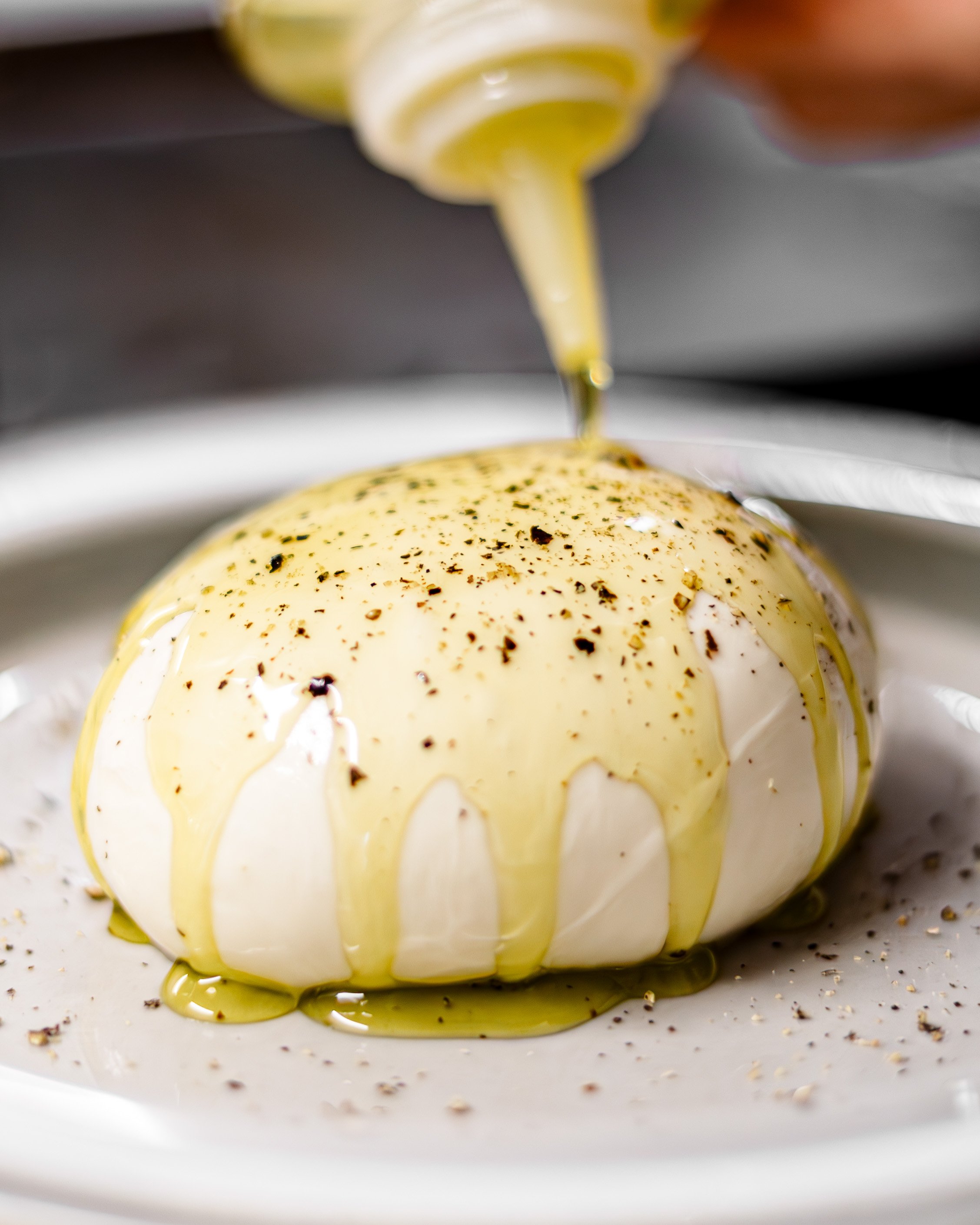
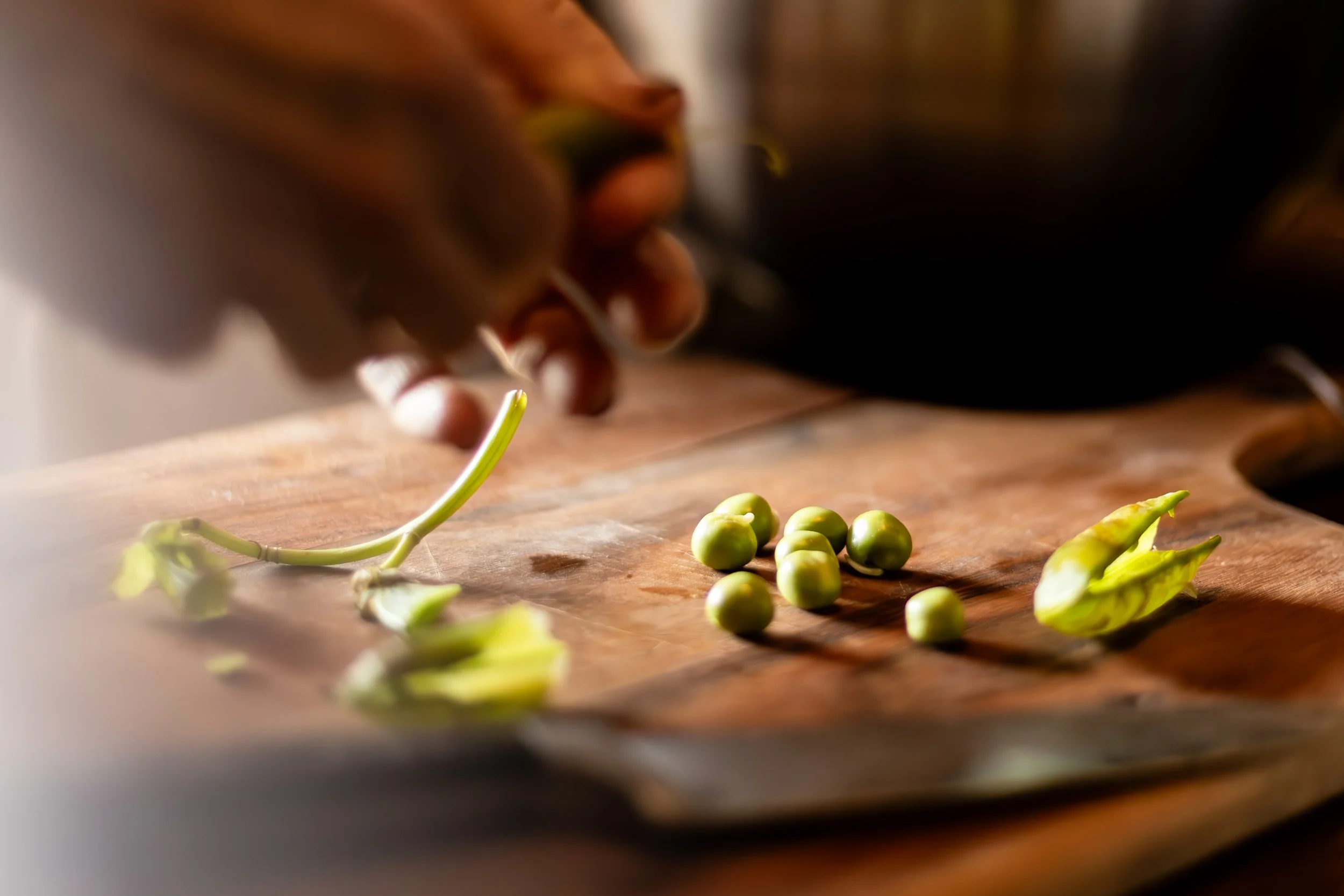
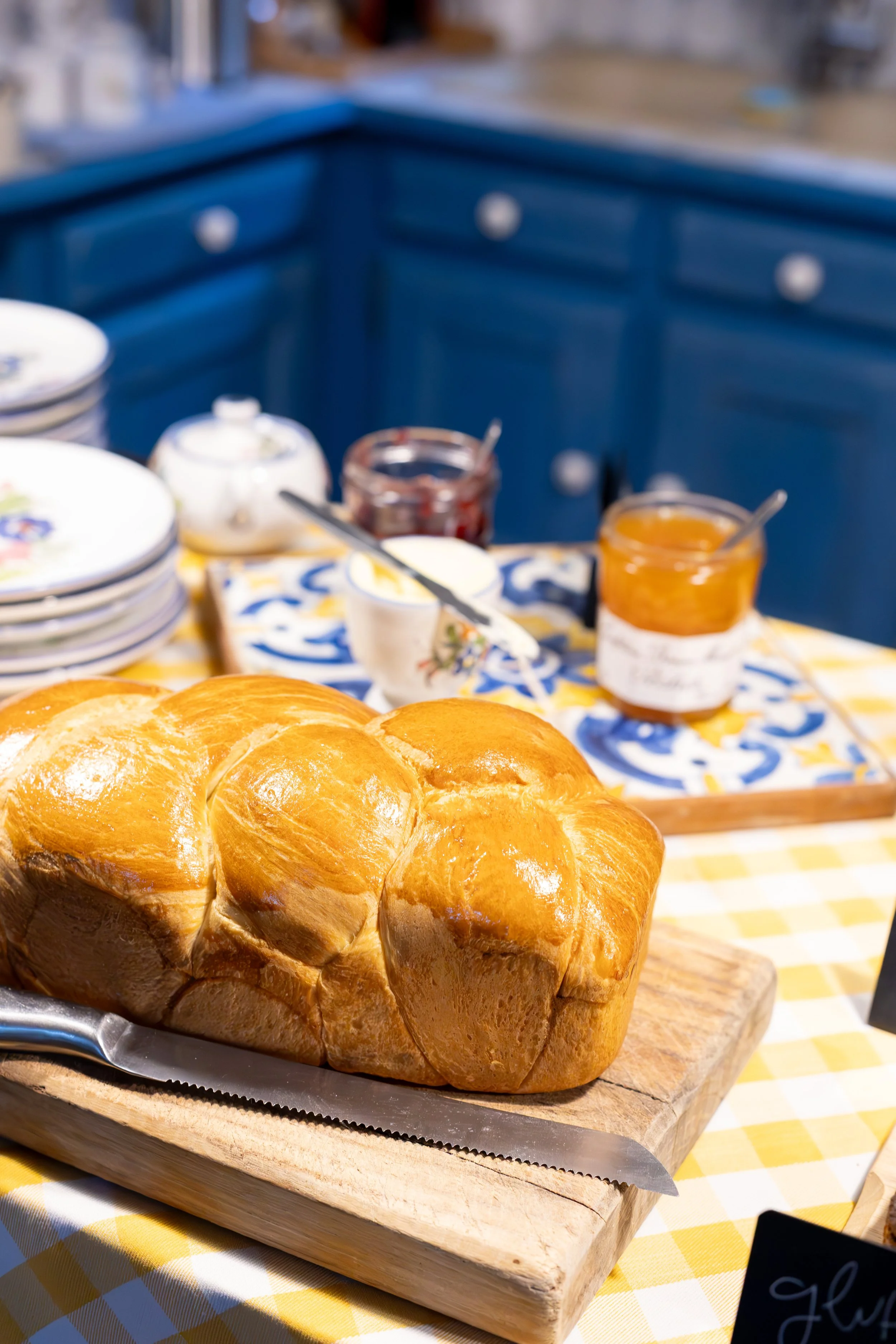
Paul is our chef de cuisine—he's the one making fresh bread every morning. Sourdough, brioche, focaccia—whatever calls to him based on what we're serving that day. He also makes cheese from scratch throughout the week: mozzarella stretched in front of guests (who inevitably want to try), fresh ricotta spooned onto toast, cultured butter that makes you rethink everything you thought you knew about butter. Even the yogurt at breakfast is homemade.
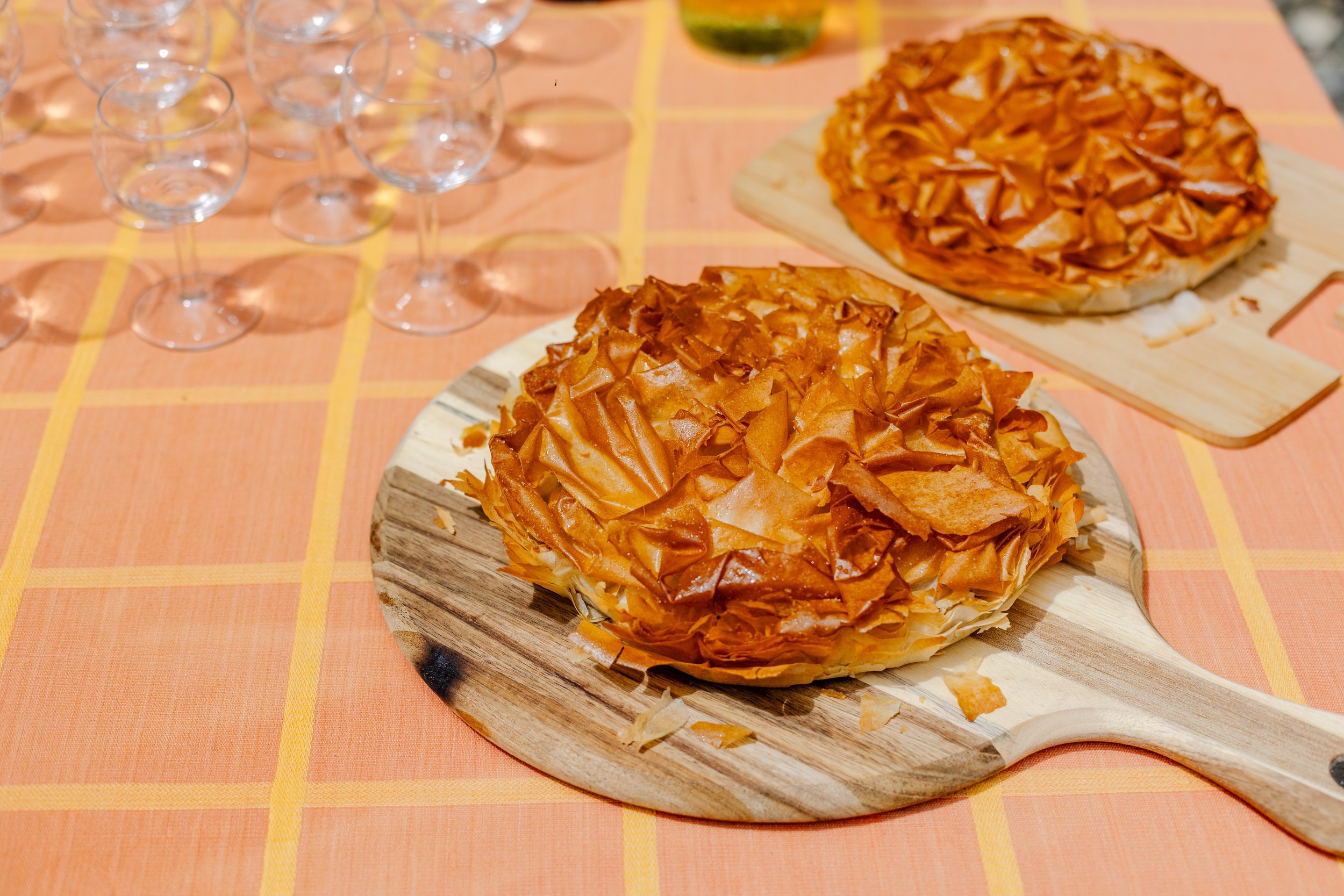
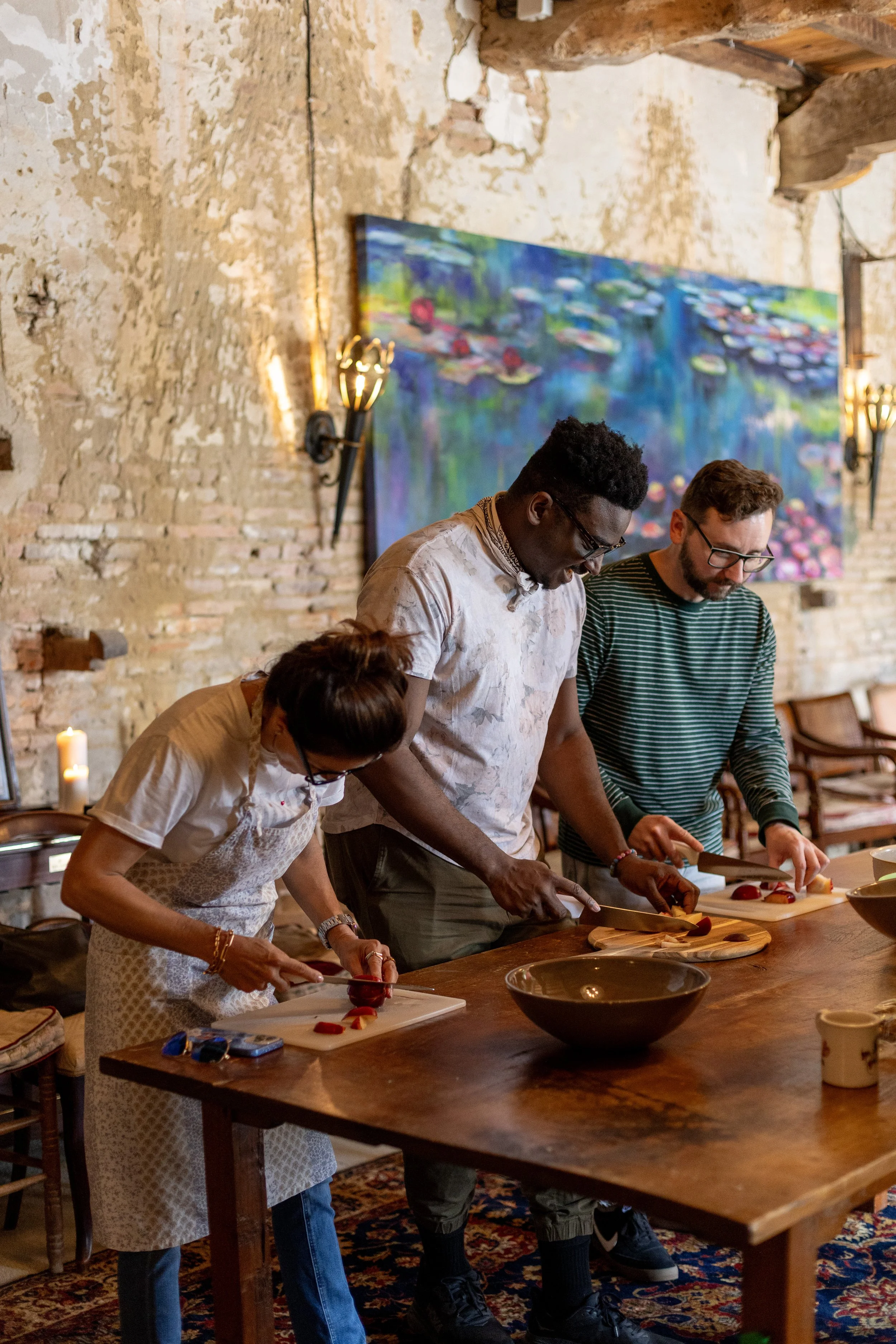
Depending on which retreat you join, we also bring in guest hosts who lead hands-on workshops. Erin McDowell might teach you how to make puff pastry from scratch. Sara Tane could walk you through perfecting your grill game or composing the ultimate salad. Each guest host brings their own expertise and energy to the week.
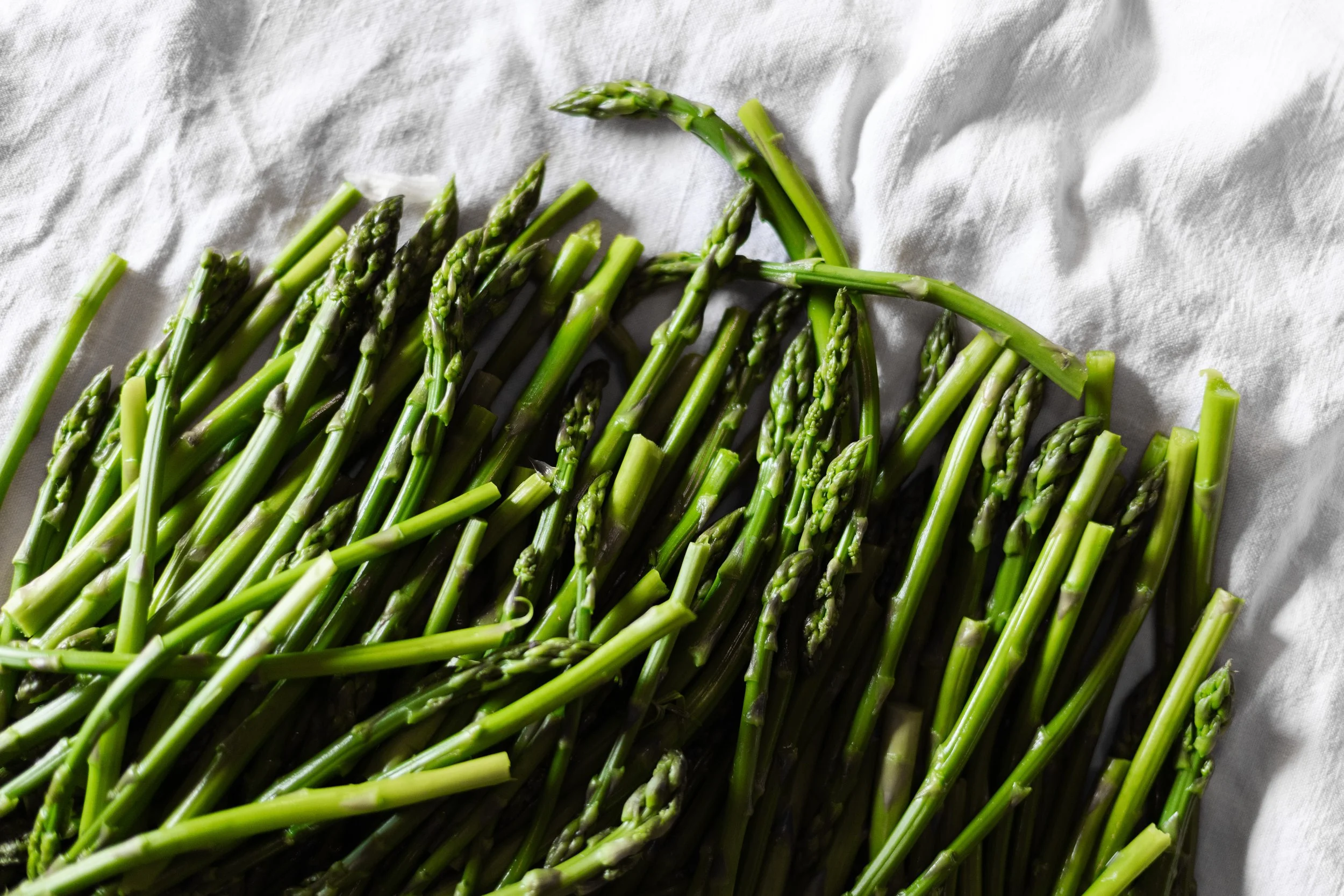
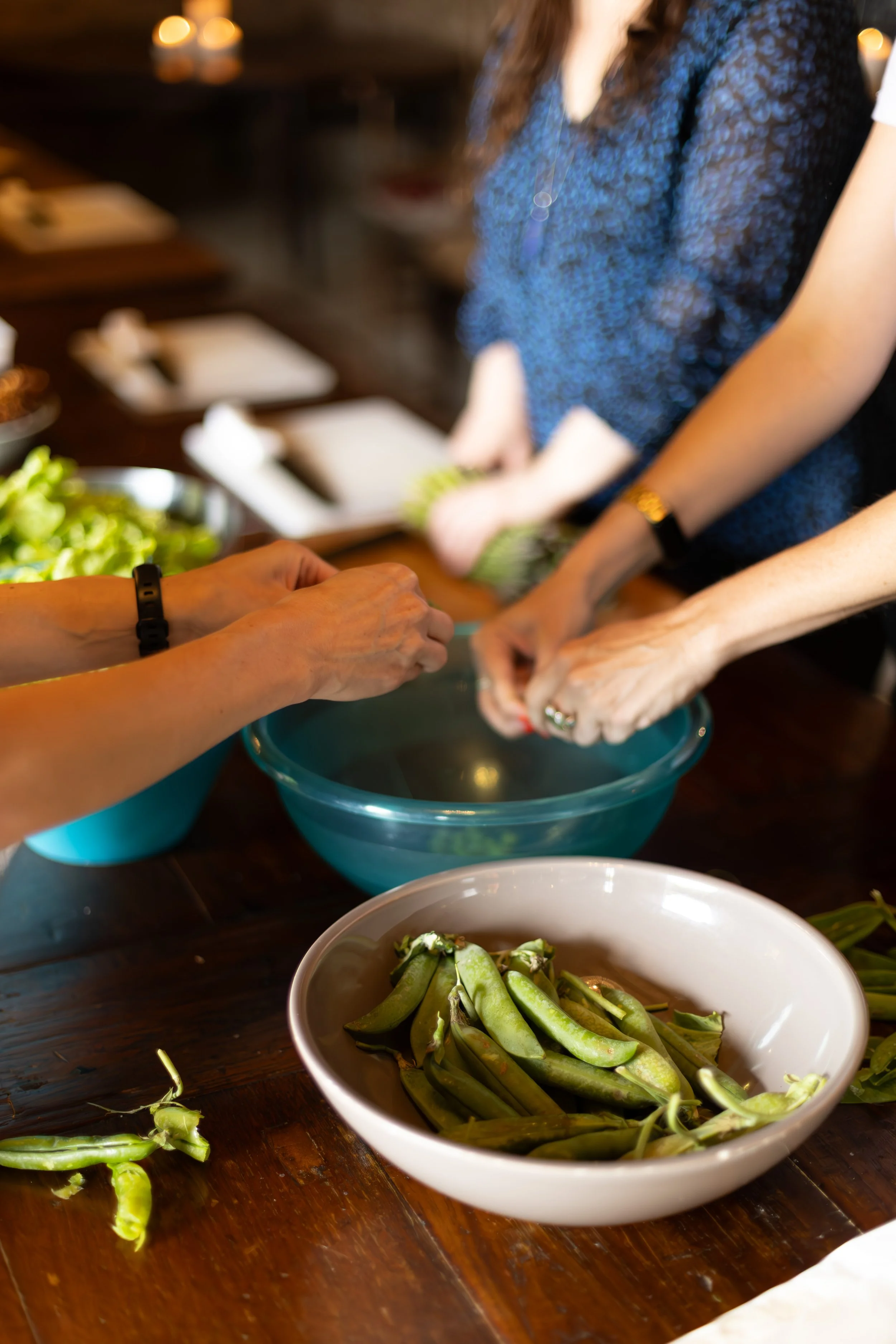
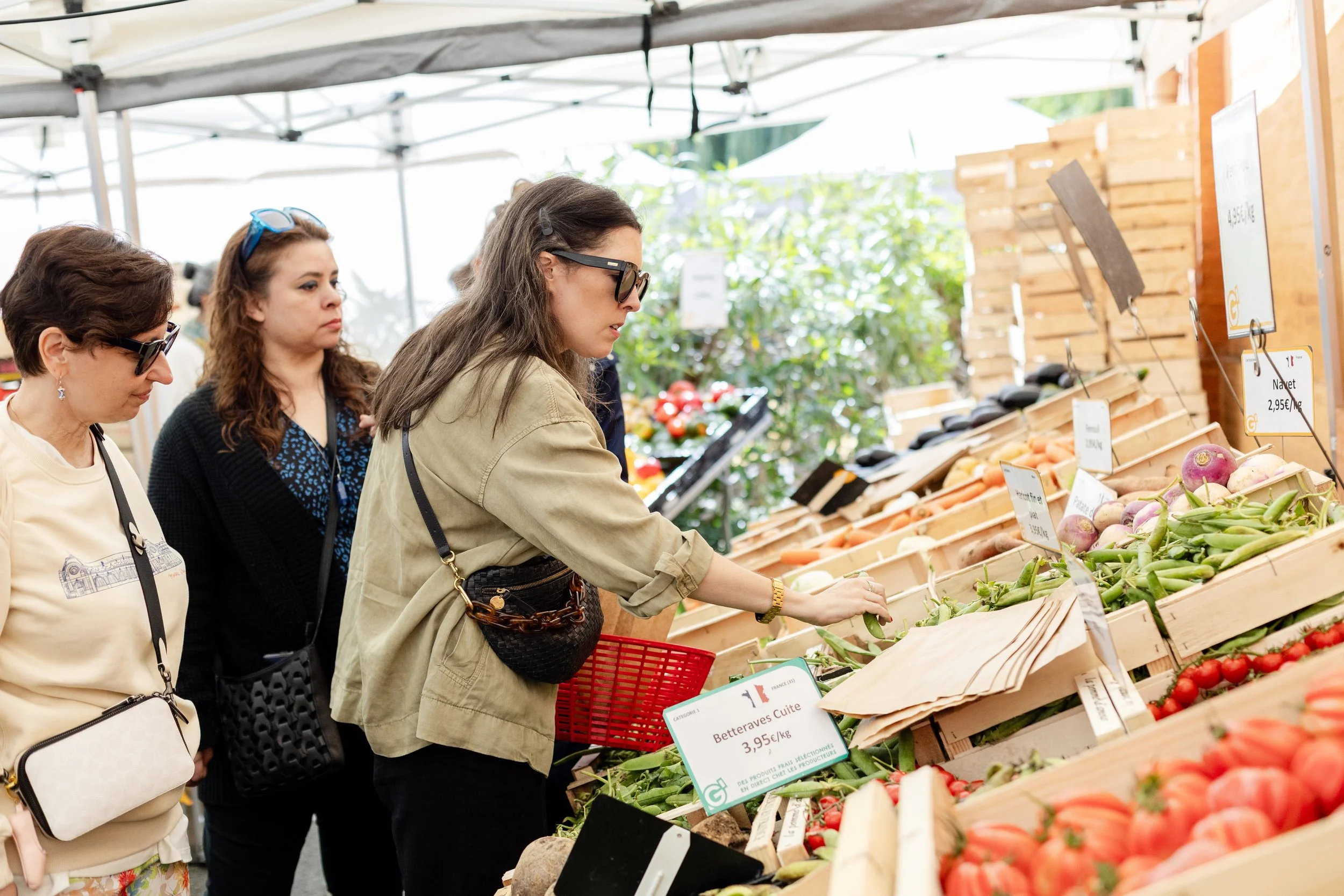
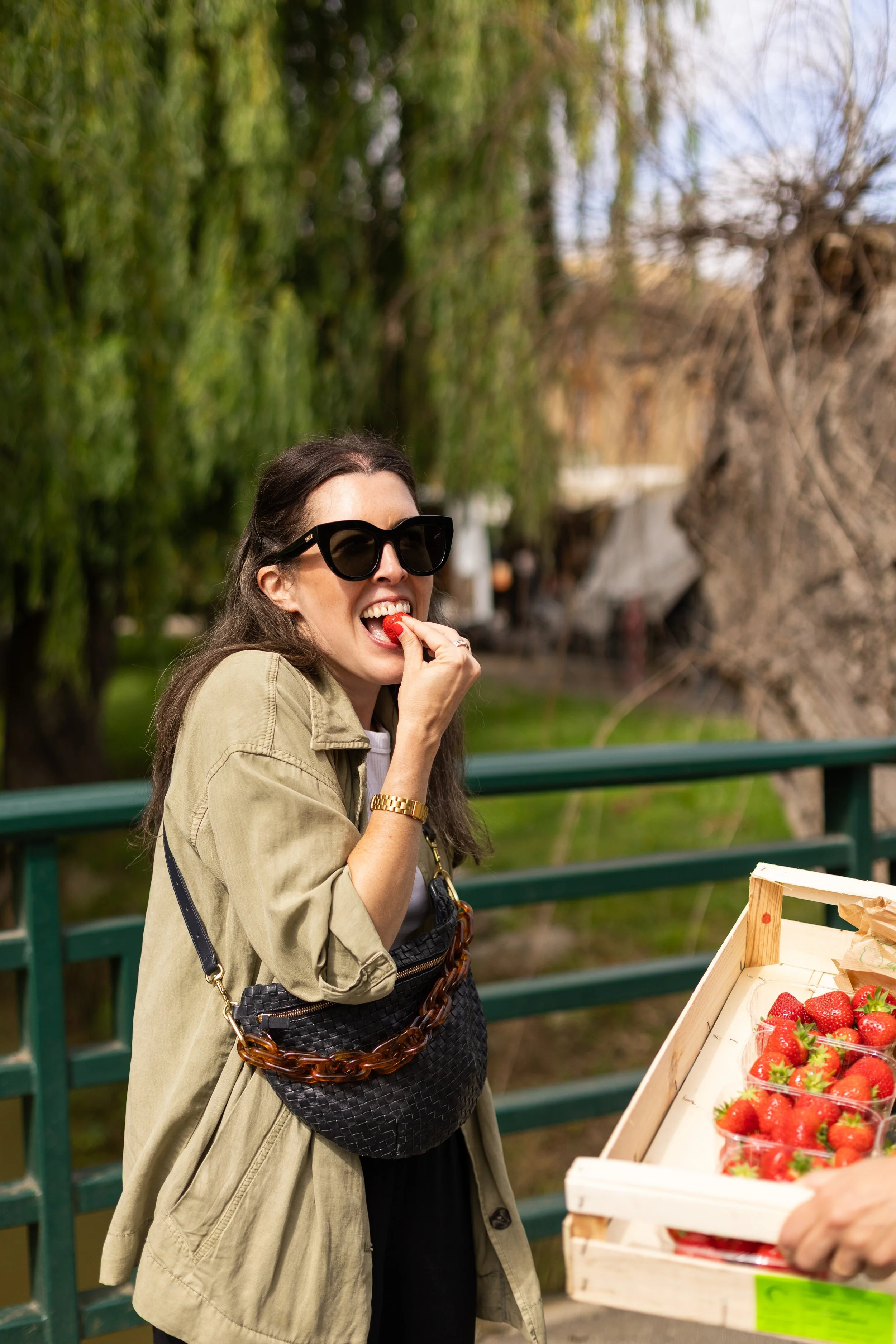
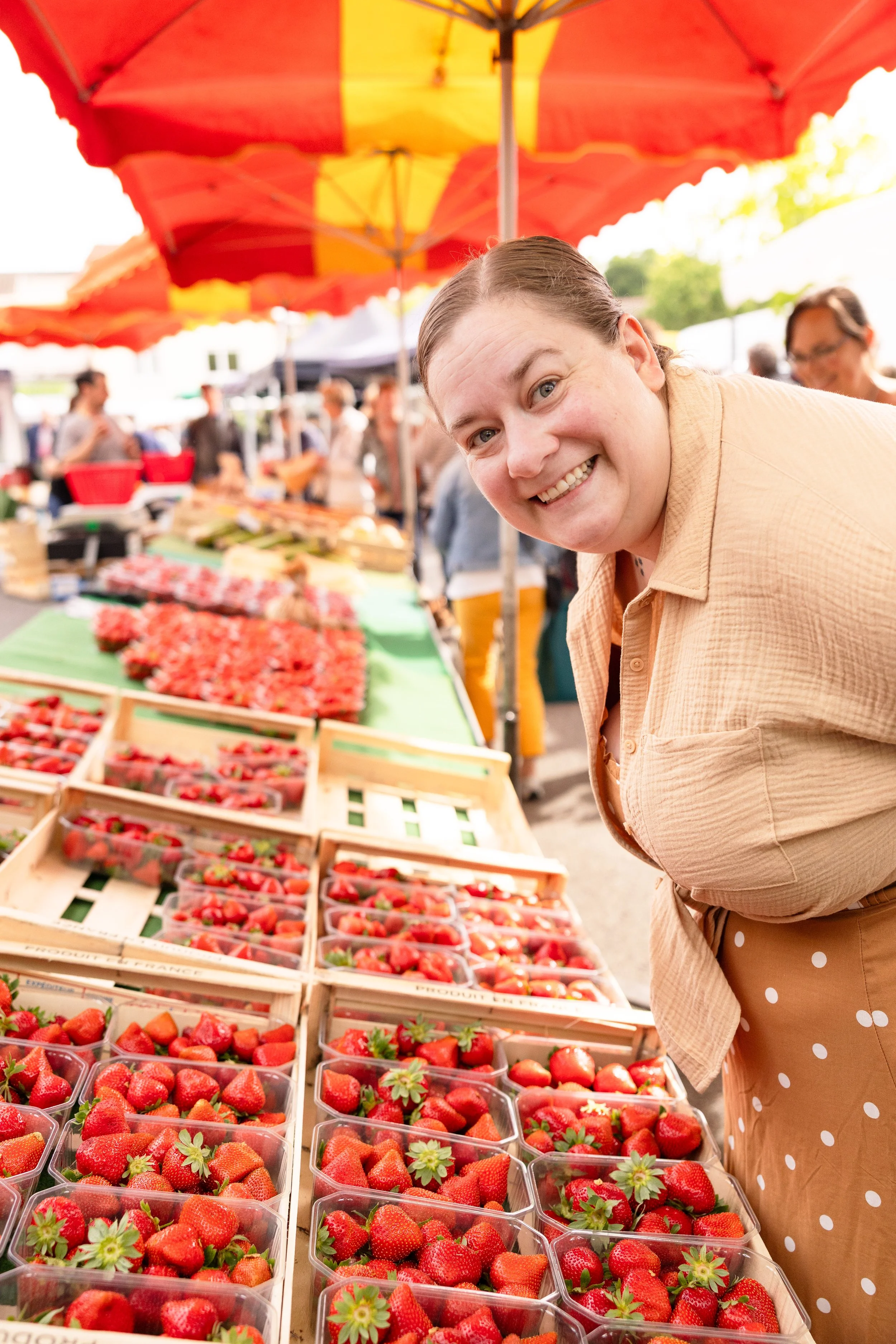
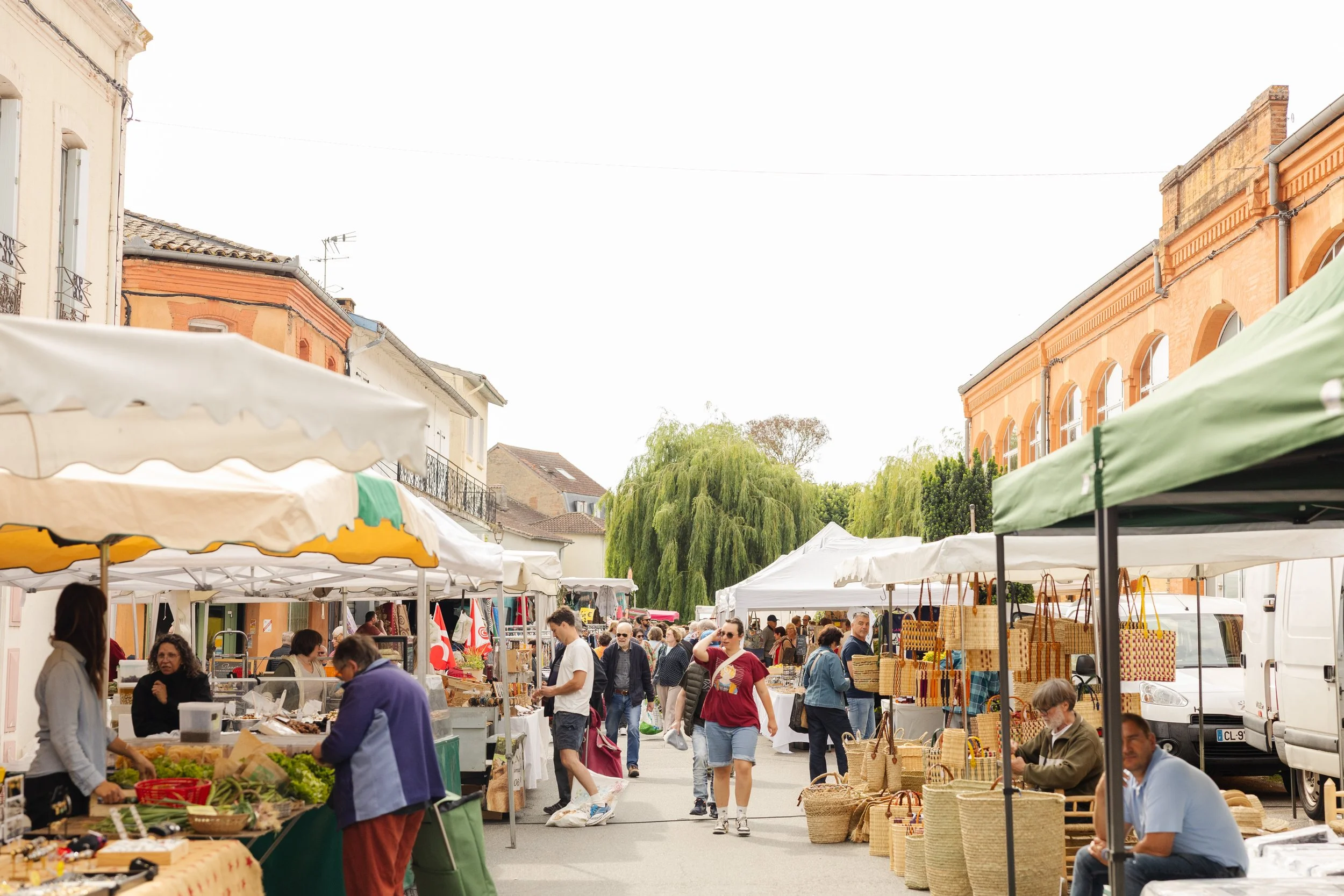
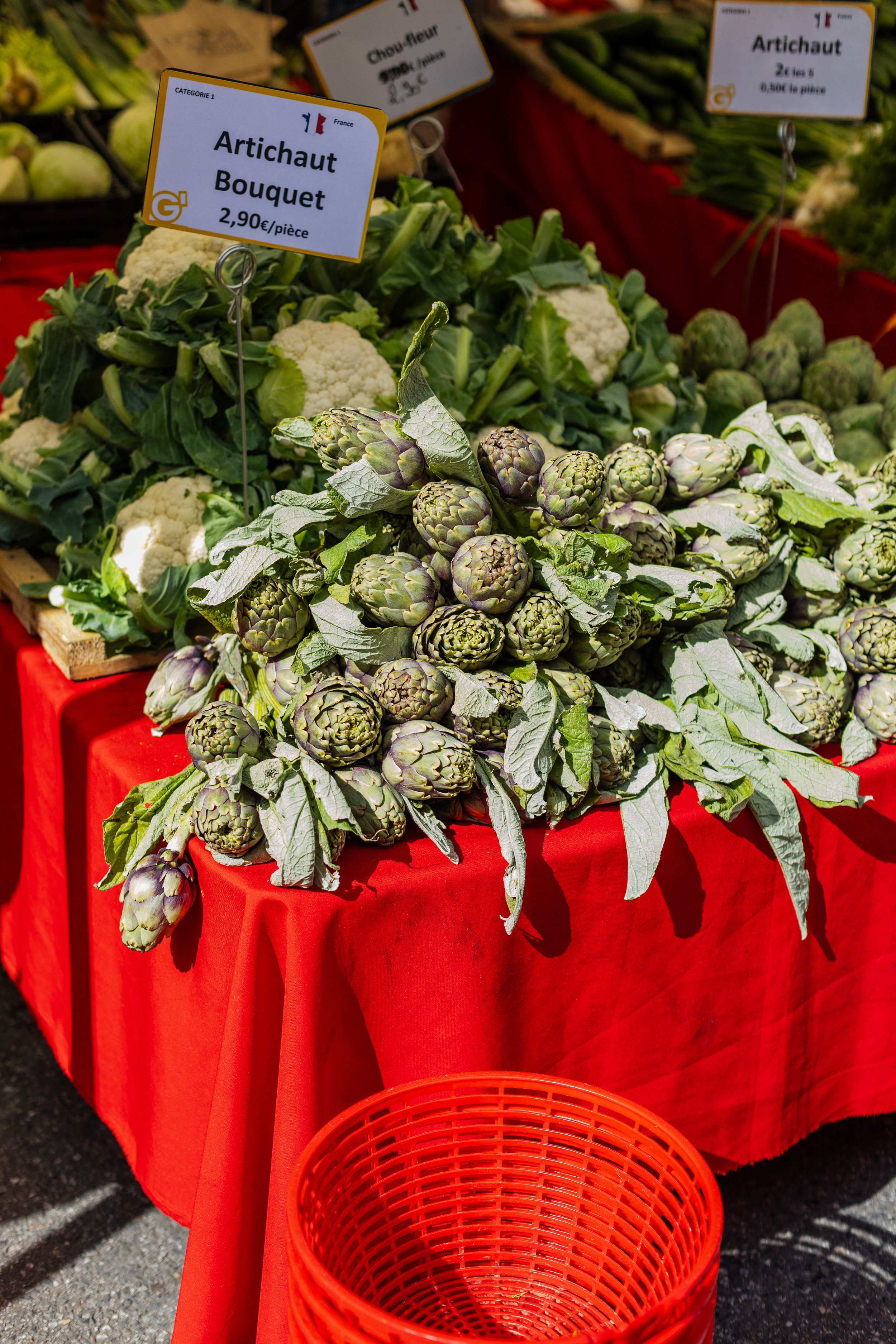
During your time here, you'll visit local markets with the Rêverie team—we'll introduce you to farmers and cheese-makers whose culture has been growing and making food longer than any of us have been alive. You'll learn how to shop seasonally, what to look for, how to pick the best produce.
And through it all, the kitchen door stays open. You can wander in, ask questions, watch Paul and the kitchen team work, steal a taste of whatever's simmering on the stove (they won't mind).
How We Plan Menus for Our French Culinary Workshops
Paul plans the week's menus in a way that's both highly structured and completely flexible, which sounds contradictory until you see it in action.
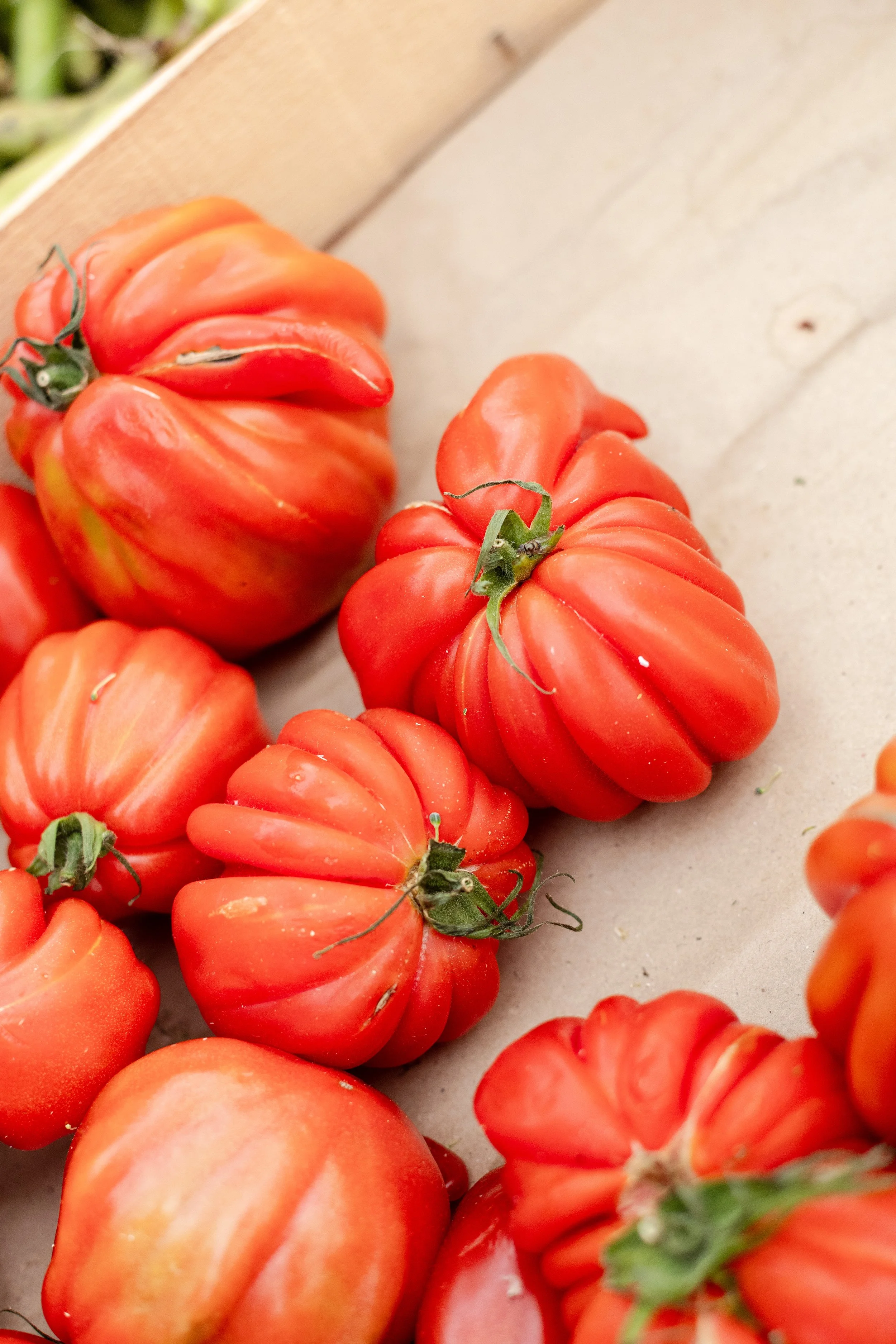
He'll start with a framework—balancing heavy dishes with light ones, raw preparations with slow braises, thinking about the colors and textures of spring or fall. But he doesn't finalize anything until he's at the market, wandering the stalls with Garrett (his sous chef), letting the produce tell him what to cook.
This is part of why market visits are built into every culinary retreat. You'll come with us to local French markets—the kind where farmers sell what they picked that morning and cheese-makers offer tastings of wheels they've been aging for months.
This is seasonal cooking, yes. But it's also regional cooking, which we think is just as important.
If we're in Occitanie, Paul might make cassoulet, that slow-cooked white bean dish with duck confit that the region has been perfecting for centuries. In Provence, maybe bouillabaisse, the fisherman's stew that tells the story of the Mediterranean coast. In the Loire Valley, you'll taste river fish paired with local goat cheese and herbs. (And you'll understand why the Loire Valley is smug about its goat cheese.)
We're not just cooking what's in season—we're cooking what this place is about, and sharing the culture and the stories behind it.
Food as storytelling. You're at the table for all of it.
What You'll Learn at Our French Cooking Classes (And Why We Share Everything)
If you ask Paul how he made something, he'll tell you. The whole recipe, technique and all. No hedging, no "it's a secret," no chef mystique.
"I can give you the recipe," he says, "but your lamb will be different from mine. You'll use different carrots, different onions. Maybe you'll add lemon because that's what you have. That's the point—it's not about owning a recipe. It's about understanding the approach."
He wants you to go home and make sourdough. To try stretching mozzarella (it's easier than you think, and deeply satisfying). To understand that you don't need a culinary degree to make something delicious—you just need to pay attention.
Our guest hosts are the same way. Erin McDowell will walk you through puff pastry without gatekeeping the technique. Sara Tane will teach you how to grill anything—vegetables, fish, meat—and build the sauces to go with them. Whoever's leading workshops that week, they're there to share, not to perform.
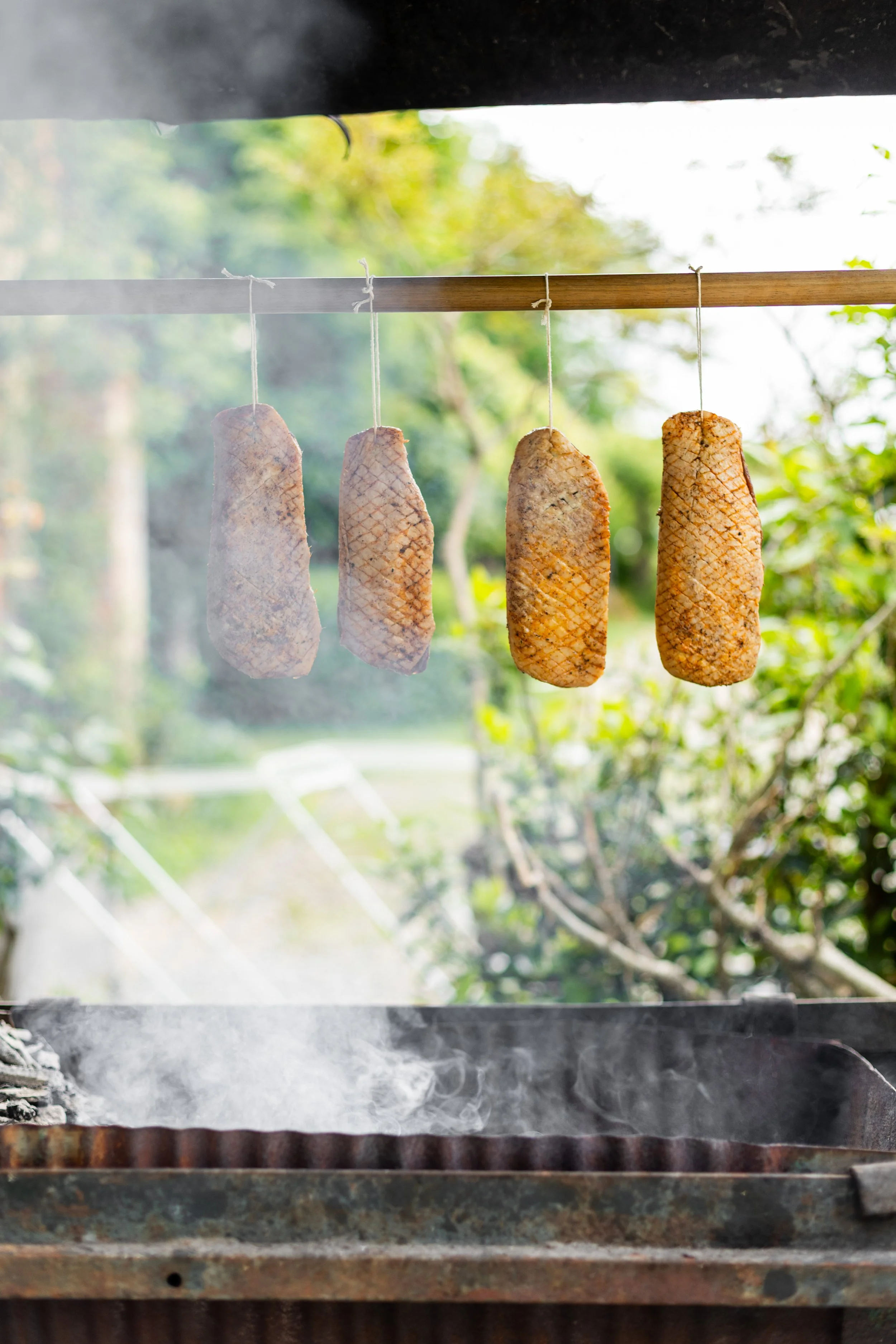
And while all this teaching is happening, Paul's also using the whole animal. The duck legs for confit, the fat rendered for the best roasted potatoes you'll ever have, the bones for stock. Nothing gets wasted because Paul respects the ingredient too much to throw half of it away.
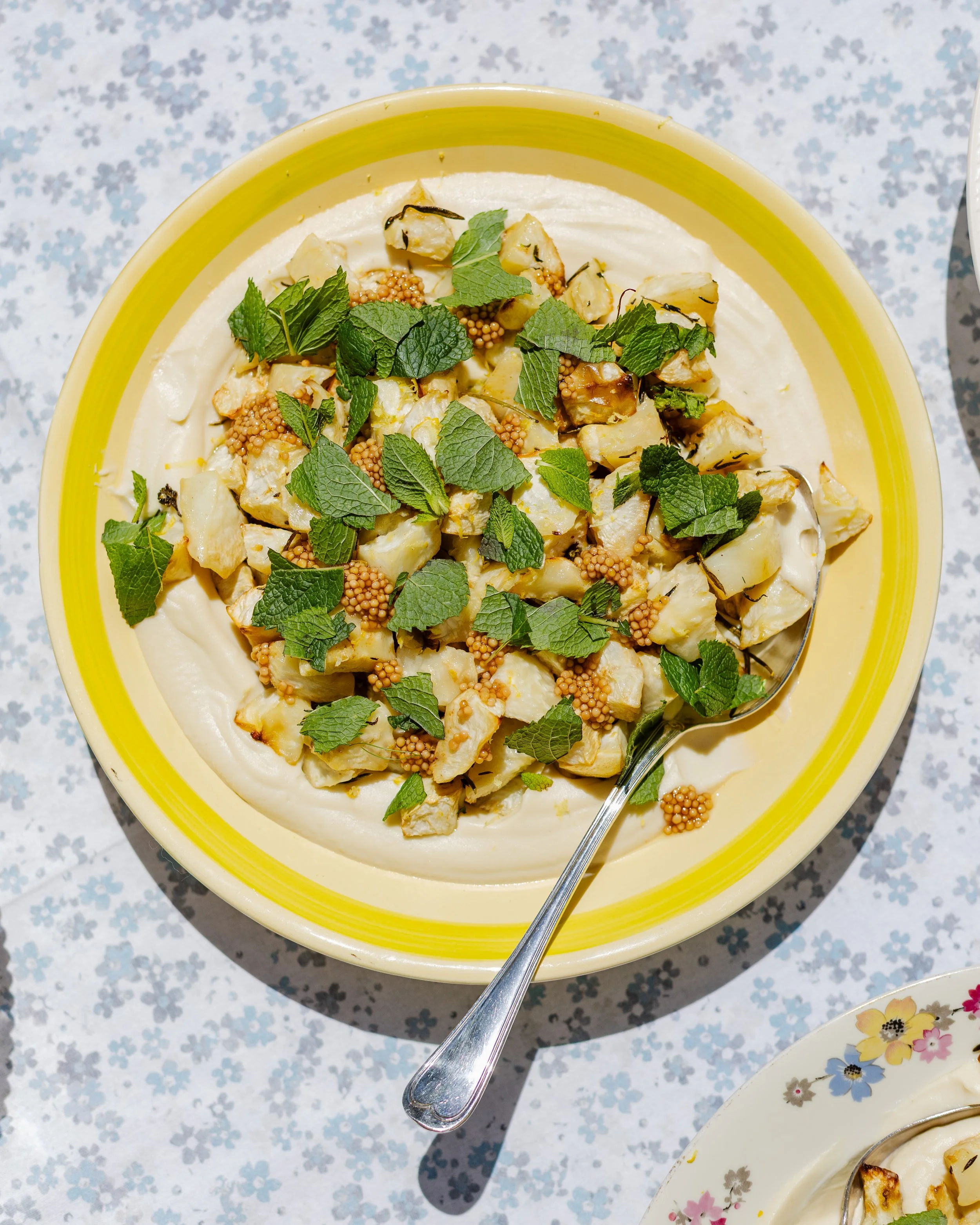
One day during the week, the menu will be entirely vegetarian—not because we're trying to make a statement, but because Paul believes vegetables deserve the same attention as anything else. That day, guests will sit down to a spread of roasted, raw, pickled, and charred vegetables and someone will inevitably say, "Wait, that was just vegetables?"
Yeah. That was just vegetables. And they were perfect.
(This is also the day Paul saves money on protein so he can blow the budget on really good foie gras later in the week. The man is strategic.)
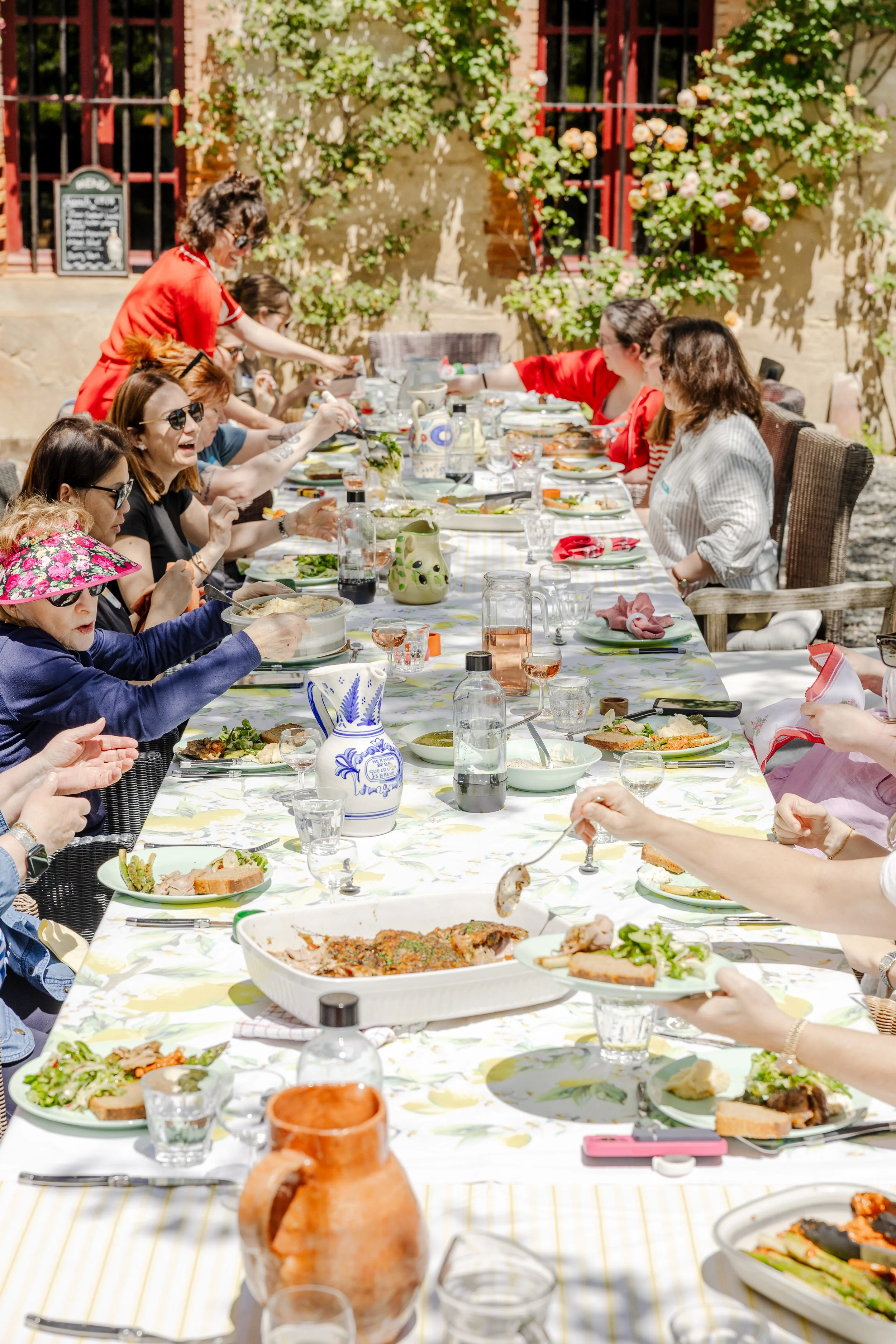
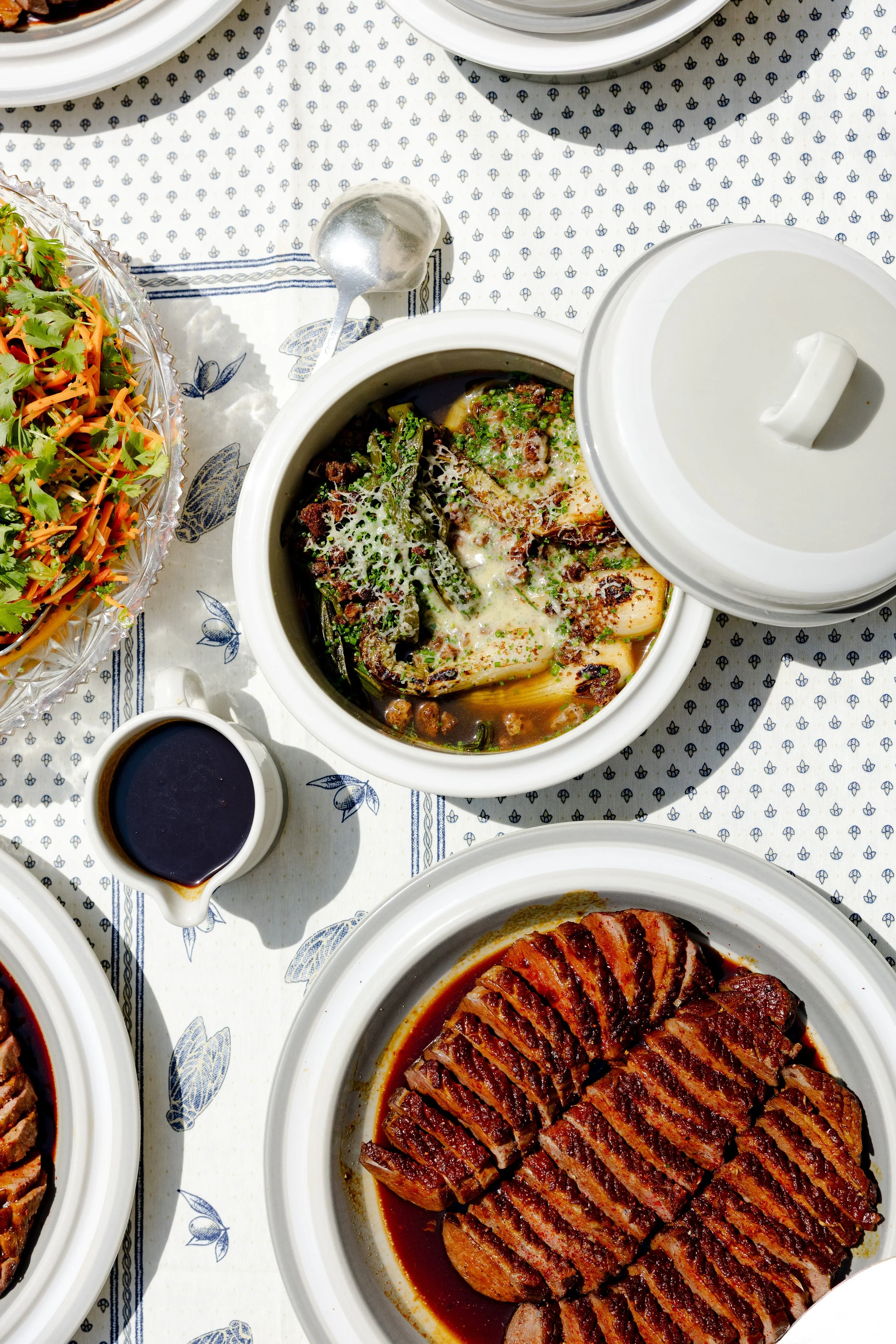
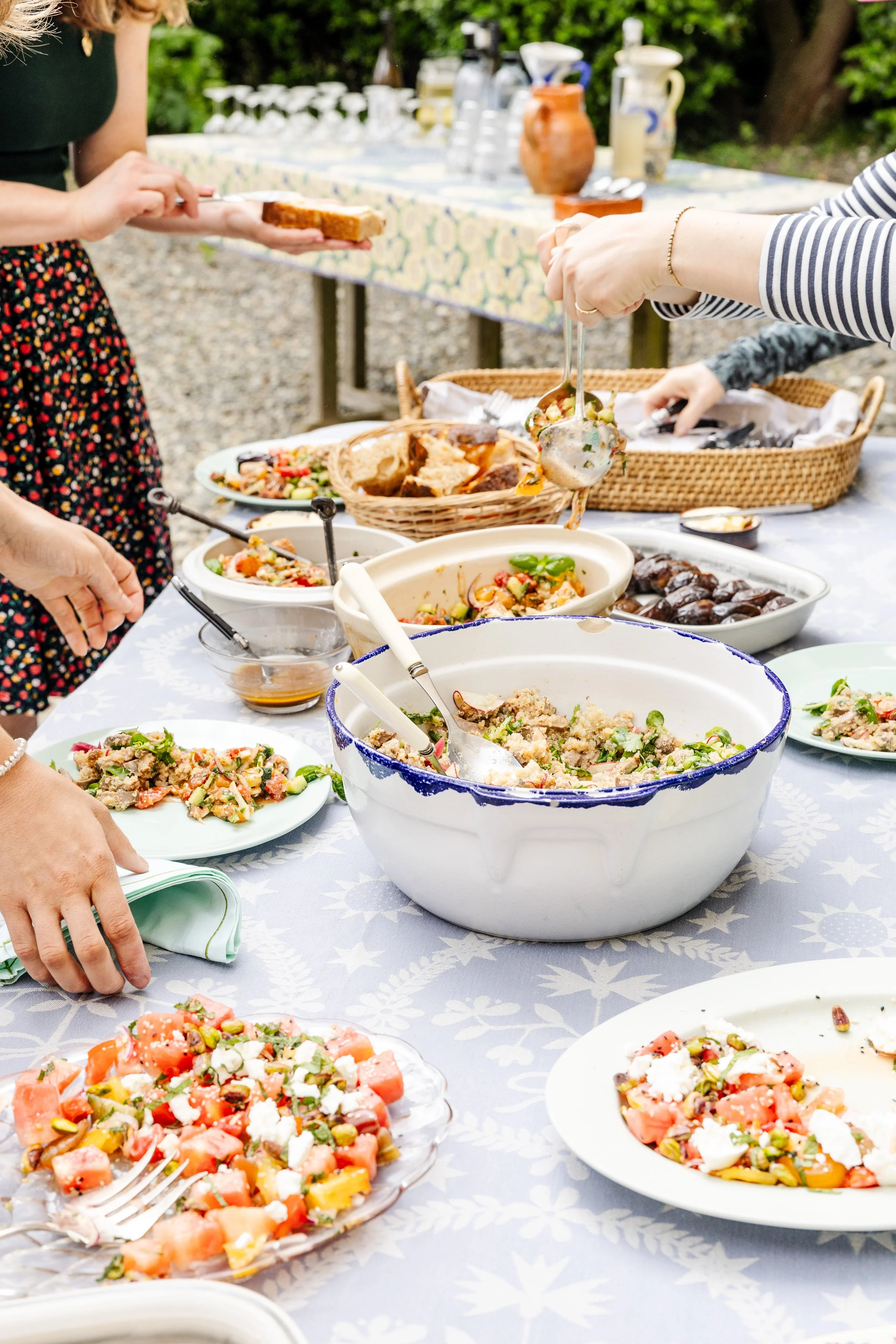
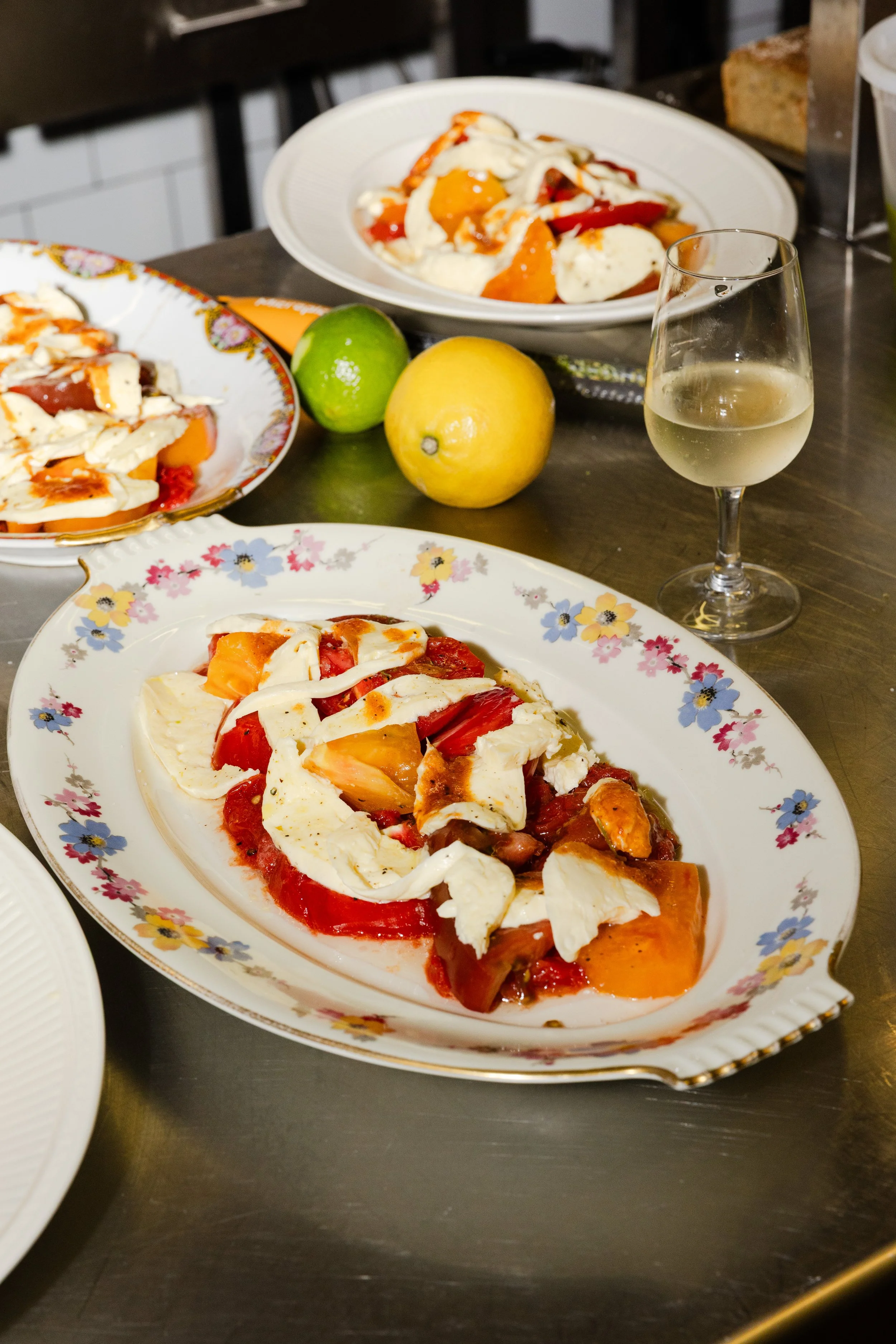
What Family-Style Dining Looks Like at a French Food Retreat
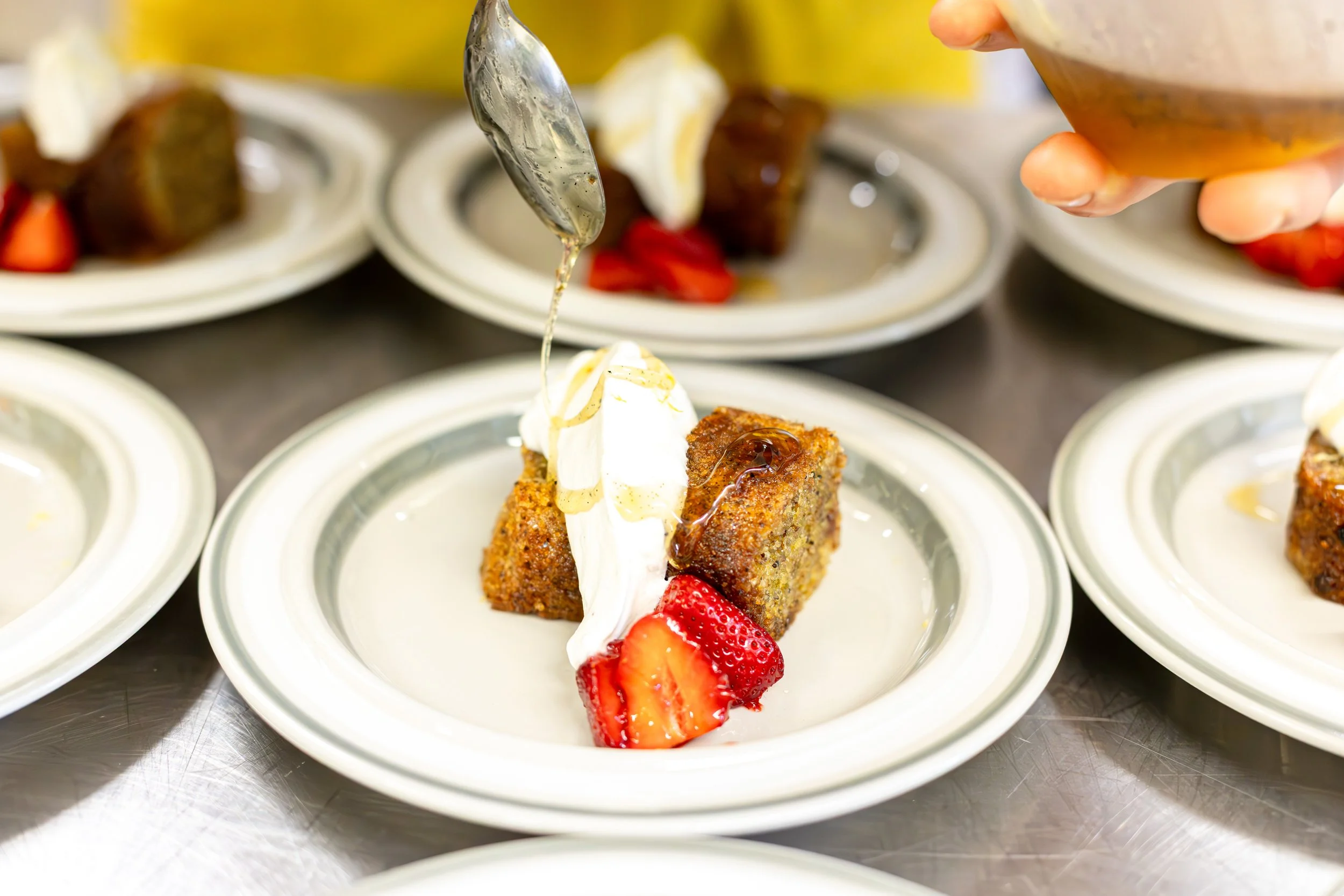
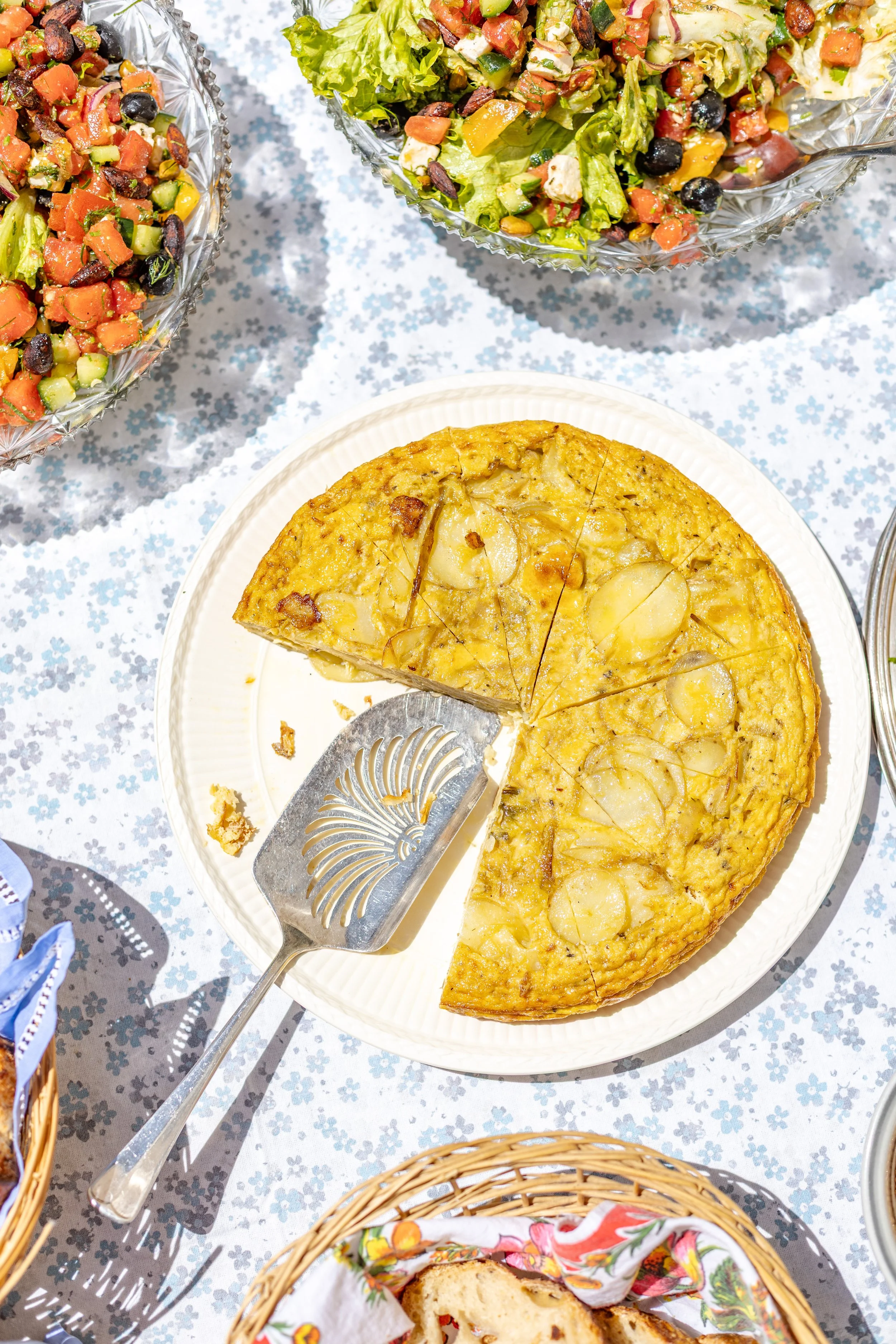
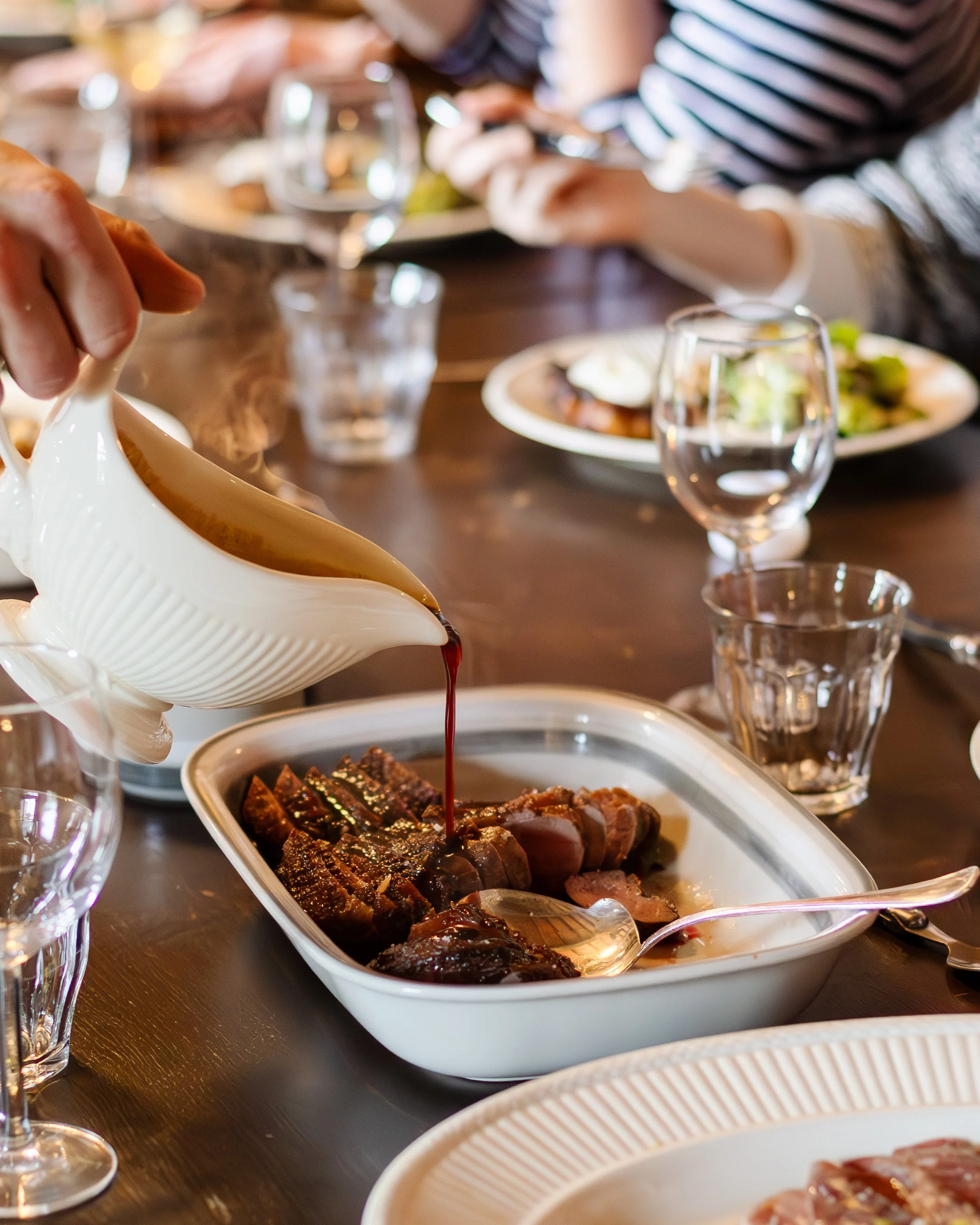
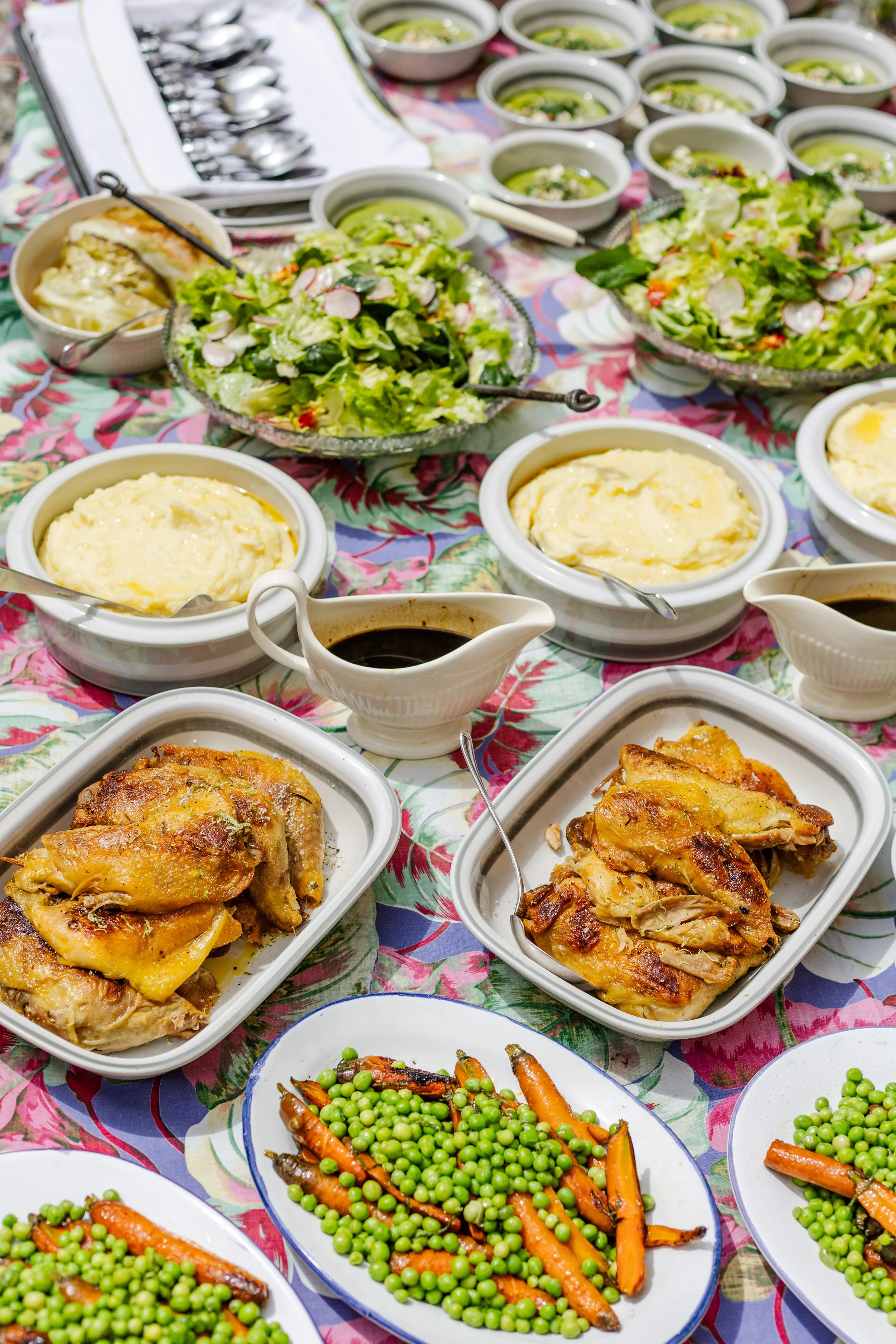
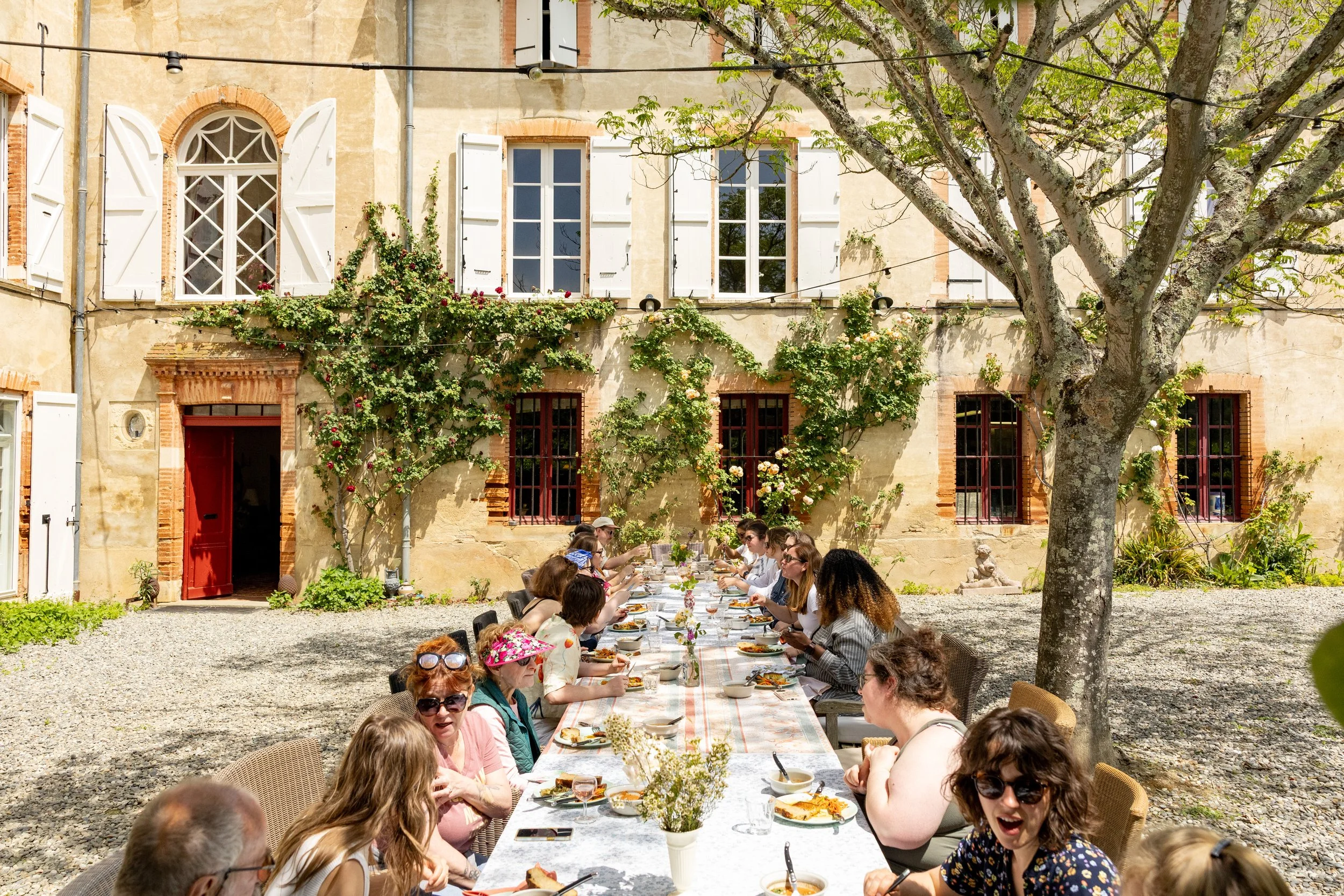
We serve everything family-style. Big platters down the center of the table. Bowls passed hand to hand. Paul will make an appearance to explain the details of what is set before you before scurrying back off to the kitchen, his happy place.
Every meal comes with wine pairings carefully selected by Esmé, our sommelier. She'll talk you through why she chose this Chenin Blanc with the goat cheese, or how this Burgundy complements the duck. It's wine education without the intimidation—just good bottles that make the food taste even better.
It's not stuffy. It's not quiet. There's laughter, there are elbows on the table, there are people getting up for seconds before they've even finished firsts. Someone's telling a story about the market that morning. Someone else is debating Paul about whether you really need to rest your dough overnight (you do, but the debate is fun).
Someone will pop their head into the kitchen mid-prep to ask Paul a question, and he'll stop what he's doing to show them how to brunoise a carrot or why he's toasting spices before grinding them.
Maybe he's stretching fresh mozzarella and invites you to try. (Your first pull will probably break. That's fine. Try again.) Or he's pulling sourdough from the oven and explains his starter technique while it cools, flour still dusted across his apron.
These aren't formal cooking workshops—they're just moments that happen naturally when you're curious and the chef wants to share.
This is the kind of access you don't get in a restaurant. You don't even get it at most cooking classes. But here, the kitchen door stays open. Curiosity is not just welcome—it's encouraged.
Because food is the thing that connects us. To each other, to the place we're in, to the season we're living through. And when you demystify it—when you let people see how it's made and taste how good it can be and understand that they could try this at home—something shifts.
What Our guests say…
"I was not prepared for how good the food would be."
"Every meal was a delight—visually and gastronomically."
"The food was off-the-charts. Fresh, delicious, varied, abundant."
"I came home and hated my food for a week." (We're sorry. Also, we're not sorry.)
But our favorite might be this one: "It felt so nice to be taken care of in that way for a few days."
That's what we're after. Not wowing you into silence. Not making you feel like you need to dress up or perform at the table. Just taking care of you with skill and warmth and really, really good food.
The kind that makes you want to pop your head into the kitchen and ask how we made it.
And when you do, we'll tell you. Paul will probably hand you a spoon to taste something. You might end up helping with dinner.
That's just how it goes here.
Ready to experience a French culinary retreat where the food is phenomenal, the kitchen door is always open, and you'll learn more than you ever expected? Rêverie's cooking retreats take place throughout France—from Occitanie to Provence to the Loire Valley. Our culinary workshops blend exceptional meals, hands-on learning, market visits, and wine pairings into a week you won't forget. Explore our upcoming retreats.
